
Инсайты LankaTrip

33 мин чтения

Ethical Wildlife Tourism in Sri Lanka in 2026: Elephant Orphanages, Turtle Hatcheries and How to Tell Conservation From a Photo Op

Elephant bathing, turtle hatchlings, sanctuary photos — Sri Lanka's most popular wildlife attractions are also its most debated. This 2026 guide gives you the evidence, the law, and a straightforward way to decide for yourself.

Назад в блог
Ethical Wildlife Tourism in Sri Lanka in 2026: Elephant Orphanages, Turtle Hatcheries and How to Tell Conservation From a Photo Op

There is a photograph almost every visitor to Sri Lanka is offered the chance to take. It might be an elephant being bathed in a river while you pour water over its back. It might be a hatchling turtle in your palm, seconds before it is carried to the sea. It might be a leopard, framed between the roll bars of a jeep that has just accelerated into position ahead of six others.

All three feel, in the moment, like a connection with something wild and wonderful. Two of the three are genuinely contested, and the third depends entirely on how your driver behaves in the ninety seconds after the sighting.

This is a harder subject than most travel guides admit. The comfortable version says 'avoid elephant riding, everything else is fine'. The reality in Sri Lanka is considerably more tangled, because the country sits at an unusual intersection: extraordinary biodiversity, deep cultural traditions involving captive elephants, a serious conservation crisis in the countryside, and a tourism economy that many rural families genuinely depend on.

We are not going to tell you that every animal attraction is cruel, because that is not true and it is not useful. Nor are we going to reassure you that your entry fee automatically funds conservation, because that is frequently not true either.

What we will do is lay out what Sri Lankan law actually requires, what the credible criticisms are and who is making them, where the genuine uncertainty sits, and give you a practical test you can apply at the gate of any facility — including ones that did not exist when this article was written.

One note on how we have written this. Our standing policy on this site is that we do not name or recommend specific businesses, and that matters more here than anywhere. An article that named three 'ethical sanctuaries' would be out of date within a year, and would quietly become advertising. Criteria age far better than recommendations.

Кратко

  • Sri Lanka has roughly 6,000 to 7,000 wild elephants and around 200 registered captive ones
  • A 2021 animal protection law introduced real welfare rules for captive elephants, including biometric ID cards, a mandated daily bath, and a ban on working elephants under five
  • Elephant riding is regulated rather than banned — but regulation is not the same as it being a good idea
  • The critical distinction is between permanent-captivity 'orphanage' models and rehabilitation-and-release 'transit home' models
  • Turtle hatcheries are the single most contested attraction, with credible criticism around egg-buying, tank retention and daytime releases
  • Watching wild turtles nest at night, under guided supervision, is generally considered the better experience
  • Between 2015 and 2024 an estimated 1,195 people and 3,484 elephants were killed in human-elephant conflict
  • In 2026, reporting indicated 128 elephants killed in just the first four and a half months
  • Your safari driver's behaviour matters more to animal welfare than which park you choose

Why This Question Is Genuinely Hard in Sri Lanka

In some countries the ethics of animal tourism are relatively straightforward, because the practices in question are recent commercial inventions with no roots beyond tourism. Sri Lanka is not one of those countries.

Elephants have been kept, worked and revered here for well over two thousand years. They appear in the ancient chronicles, in temple architecture, and in religious processions that predate the tourism industry by many centuries. A captive elephant walking in a perahera is not there because a tour operator invented an attraction; it is there because of a tradition that Sri Lankans themselves hold in genuine reverence.

At the same time, complaints of ill-treatment among privately owned captive elephants are widespread and long-standing, and were serious enough that the government legislated specifically on the issue in 2021.

Then there is the conservation context, which most visitors never hear about. Sri Lanka has one of the world's most severe human-elephant conflicts. Between 2015 and 2024, reporting to parliament put the toll at nearly 1,195 people and 3,484 wild elephants killed. Those elephants were not killed by tourists. They were killed by farmers protecting crops, by gunshot, by explosive-laden fruit, by electrocution and by trains.

This changes the frame. The most important thing you can do for Sri Lankan elephants has very little to do with whether you visit a captive facility, and a great deal to do with whether the wider tourism economy gives rural communities a reason to value living elephants.

So the honest position is this: some attractions are clearly problematic, some are clearly beneficial, and a large middle group is genuinely uncertain even to specialists. Treating that middle group with false confidence — in either direction — is what most articles on this subject get wrong.

Captive elephants have millennia of cultural history hereWelfare complaints are also long-standing and realNearly 1,195 people and 3,484 elephants killed 2015–2024Most elephant deaths involve farmers, not touristsA large middle ground is genuinely uncertain

The Five-Question Test You Can Use Anywhere

Before the detail, here is the practical tool. These five questions can be applied at the entrance of any wildlife attraction in Sri Lanka, or anywhere else, and they will get you to a defensible decision in about two minutes.

First: can the animal express normal behaviour? Can it move freely, choose shade, avoid people, socialise with its own species? An elephant chained by multiple legs cannot. A turtle in a bare concrete tank cannot. This single question resolves most cases.

Second: who is the experience designed around — the animal or the visitor? If the schedule exists so that the 11am tour group gets its photograph, the animal's needs are secondary by definition. Facilities that put animal welfare first are often slightly disappointing as visitor attractions, and that is a good sign rather than a bad one.

Third: is there direct physical contact for entertainment? Riding, bathing, feeding by hand, holding hatchlings, posing with a cub. Contact is where welfare problems concentrate, because a wild animal that reliably tolerates strangers has usually been made to.

Fourth: where does the animal go next? This is the question that separates genuine rehabilitation from permanent display. Ask directly: are any animals here released? How many were released last year? A facility doing real rehabilitation work will answer specifically and with obvious pride. A vague answer is an answer.

Fifth: what happens to the money? Is there any published evidence of conservation spending, research output, veterinary care or community programmes? Not a claim on a signboard — evidence.

You will not always get clean answers. But asking the questions out loud, at the ticket desk, does something useful in itself: it tells the operator that visitors are checking. Enough visitors asking changes what facilities think they can get away with.

Can the animal behave normally?Is it designed around the animal or the visitor?Is there contact purely for entertainment?Where does the animal go next?Is there evidence — not claims — of conservation spending

The Captive Elephant Picture in Numbers

Scale matters for understanding this issue, and the numbers surprise most visitors.

Official records have put the number of domesticated or registered captive elephants in Sri Lanka at around 200. The wild population, by contrast, has been estimated at roughly 6,000 to 7,000, based on a census conducted in 2024 whose final results were still being finalised at the time of writing. Historical estimates suggest around 14,000 elephants in the nineteenth century, giving a sense of the long-term decline.

Captive elephants in Sri Lanka are not a single category. Some are privately owned, historically as a display of family wealth, and some are owned by temples. Some are held in state facilities. Some work in logging. Some appear in cultural pageants. Some exist primarily as tourist attractions.

The welfare picture varies enormously across those categories, and generalising is a mistake in both directions. A well-cared-for temple elephant with an experienced long-term mahout may live in better conditions than an animal at a commercial facility optimised for visitor throughput.

What has been consistently criticised is the chaining. Reports and specialist commentary describe animals chained by multiple legs so that they can only shuffle rather than walk properly — a practice noted as common even where other welfare standards are met.

Understanding this scale should also recalibrate where your concern goes. Roughly 200 captive animals face welfare questions. Several thousand wild ones face survival questions. Both matter; they are not the same problem, and tourism affects them very differently.

Around 200 registered captive elephantsRoughly 6,000–7,000 wild elephantsAround 14,000 estimated in the 19th centuryCaptive elephants span private, temple, state and commercial ownershipMulti-leg chaining is a persistent criticism

What Sri Lankan Law Actually Requires

In August 2021 Sri Lanka introduced a wide-ranging set of regulations on captive elephant welfare, and it is worth knowing what they say — partly because you can observe compliance yourself.

Owners must ensure each animal holds a photo identity card carrying a DNA stamp, effectively a biometric registration intended to make it harder to launder illegally captured wild elephants into captivity.

Each elephant must be given a daily bath of two and a half hours. Baby elephants cannot be used for work of any kind, including cultural pageants, and cannot be separated from their mothers. Logging elephants may not work more than four hours a day, and night work is prohibited.

For tourism specifically: no more than four people may ride an elephant at one time, and they must sit on a well-padded saddle. Use of elephants in films is prohibited except for government productions under veterinary supervision. Mahouts are prohibited from consuming alcohol or drugs while working — a provision that drew international headlines but reflects a real and documented safety problem.

Two things follow from this. The first is that riding was regulated, not banned. Anyone telling you elephant riding is illegal in Sri Lanka is mistaken. Whether it is advisable is a separate question, addressed below.

The second is that specialists have been openly sceptical about implementation. Prithiviraj Fernando of the Centre for Conservation and Research described the law as an important first step while noting it would remain a law on paper without proper enforcement, and pointed to practices it does not address — including the covering of elephants' ears with heavy cloth during pageants, which matters because elephants regulate body temperature largely through their ears, and the chaining of all four legs.

For you as a visitor, the practical value is this: the law gives you a checklist. Is the animal in front of you chained by all four legs? Is a very young calf working? Is it covered in heavy cloth in the midday heat? You do not need expertise to notice these things.

2021 regulations introduced biometric ID cardsMandated daily 2.5-hour bathNo work for baby elephants, including pageantsMaximum four riders on a padded saddleRiding was regulated, not bannedSpecialists question enforcement and gaps

Elephant Riding: The Honest Answer

We will be direct, because this is the question readers most often arrive with.

Our view is that you should not ride an elephant in Sri Lanka, and the reasoning is not primarily about the ride itself.

An elephant that reliably carries strangers has been trained to accept a level of human control that free-living elephants do not accept. Across South Asia, that training has historically involved separating young animals and using pain or fear to establish compliance. The 2021 law's provisions on not separating calves from mothers exist precisely because this has been a documented problem.

There are also physical considerations. Elephants are enormously strong but their spines are not structurally designed to carry weight in the way a horse's is, and heavy or badly fitted saddles used over long periods are associated with injury. The regulation limiting riders to four on a padded saddle is a harm-reduction measure, not an endorsement of the practice.

The most persuasive argument, though, is simply about what the demand creates. Every rideable elephant represents a commercial incentive to produce more rideable elephants. Reducing that demand is the single clearest signal a visitor can send.

We would extend the same reasoning to elephant-back safaris and to any experience where you sit on the animal, however briefly and however gently it is presented.

It is worth saying that people who ride elephants are not villains. Most travellers who do it have simply not been given the information, often because the operator selling it had no incentive to provide it. If you have done this on a previous trip, the useful response is not guilt but a different choice next time.

Our position: do not ride elephants hereCompliance training raises the core concernElephant spines are not built for carrying loadsRider limits are harm reduction, not endorsementDemand creates the supply of rideable animalsPast choices are worth learning from, not agonising over

Orphanage or Transit Home? The Distinction That Actually Matters

This is the most useful conceptual distinction in Sri Lankan wildlife tourism, and almost no visitor arrives knowing it.

The orphanage model takes in orphaned, injured or abandoned elephants and cares for them permanently. Animals live out their lives in the facility, breed there, and are not returned to the wild. Sri Lanka's best-known example, established in the 1970s under the Department of Wildlife Conservation, has grown from a handful of elephants to somewhere in the region of seventy to ninety animals across multiple generations.

The transit home model does something structurally different. Orphaned calves are raised with deliberately minimised human contact, kept in peer groups, and released back into the wild as a cohort once old enough. The Department of Wildlife Conservation operates a facility of this type near Udawalawe National Park, where visitors watch scheduled feedings from a distance rather than interacting with the animals.

The difference in visitor experience is stark, and instructive. At a release-oriented facility you generally cannot touch, bathe, feed by hand or photograph yourself with an elephant, because every one of those things would compromise the animal's prospects after release. What you get instead is watching from a viewing platform for twenty minutes.

That is exactly the trade-off worth internalising. The less you are permitted to do, the better it usually is for the animal.

None of this means permanent-captivity facilities are simply bad. Staff at such institutions argue, reasonably, that many of their animals could never survive in the wild given their injuries or the age at which they were orphaned, and that the facility provides veterinary care and lifelong security. Genuine welfare improvements have been made at some over time.

The persistent criticisms are also worth stating plainly: chaining of animals including young ones, crowding, the commercial framing of bathing sessions, and questions about where captive-born animals eventually end up. Where breeding occurs in a facility that never releases, the captive population grows by design rather than necessity — and that is the point critics press hardest.

Our suggestion: if you visit any captive elephant facility, ask the fifth question from our test. How many animals were released last year? The answer tells you which model you are actually supporting.

Orphanage model: permanent captivity, breeding, no releaseTransit home model: minimal contact, group releaseLess visitor interaction usually means better welfarePermanent care is defensible for non-releasable animalsBreeding without release grows captivity by designAsk how many animals were released last year

Bathing, Feeding and Photo Experiences

Elephant bathing has quietly replaced riding as the signature 'ethical' elephant experience across South and Southeast Asia. It deserves more scrutiny than it gets.

The framing is appealing: you are not sitting on the animal, you are helping care for it. In practice, a bathing session usually requires an elephant to stand still in water while unfamiliar humans touch it repeatedly, on a schedule set by visitor bookings, controlled by a mahout with a hook or stick within reach.

The control is the tell. An elephant that stands calmly while a rotating group of strangers handles it is not doing so through preference. Sri Lanka's own 2021 regulations mandate a daily bath as a welfare requirement — a bath is something the elephant needs, not a service tourists must provide.

Hand-feeding raises related issues. It habituates animals to associating humans with food, which is precisely the behaviour that becomes dangerous in wild or semi-wild contexts, and it typically requires the animal to be positioned and restrained for visitor convenience.

This does not mean every facility offering bathing is abusive. It does mean the presence of contact experiences is a signal that the operation is designed around visitor experience, which our five-question test flags for a reason.

The same logic applies to any 'walk with' or 'volunteer with' programme where physical proximity is the selling point. Genuine volunteer conservation work in Sri Lanka exists — habitat surveys, fence maintenance, nest monitoring, data collection — and it is mostly unglamorous and involves very little animal contact.

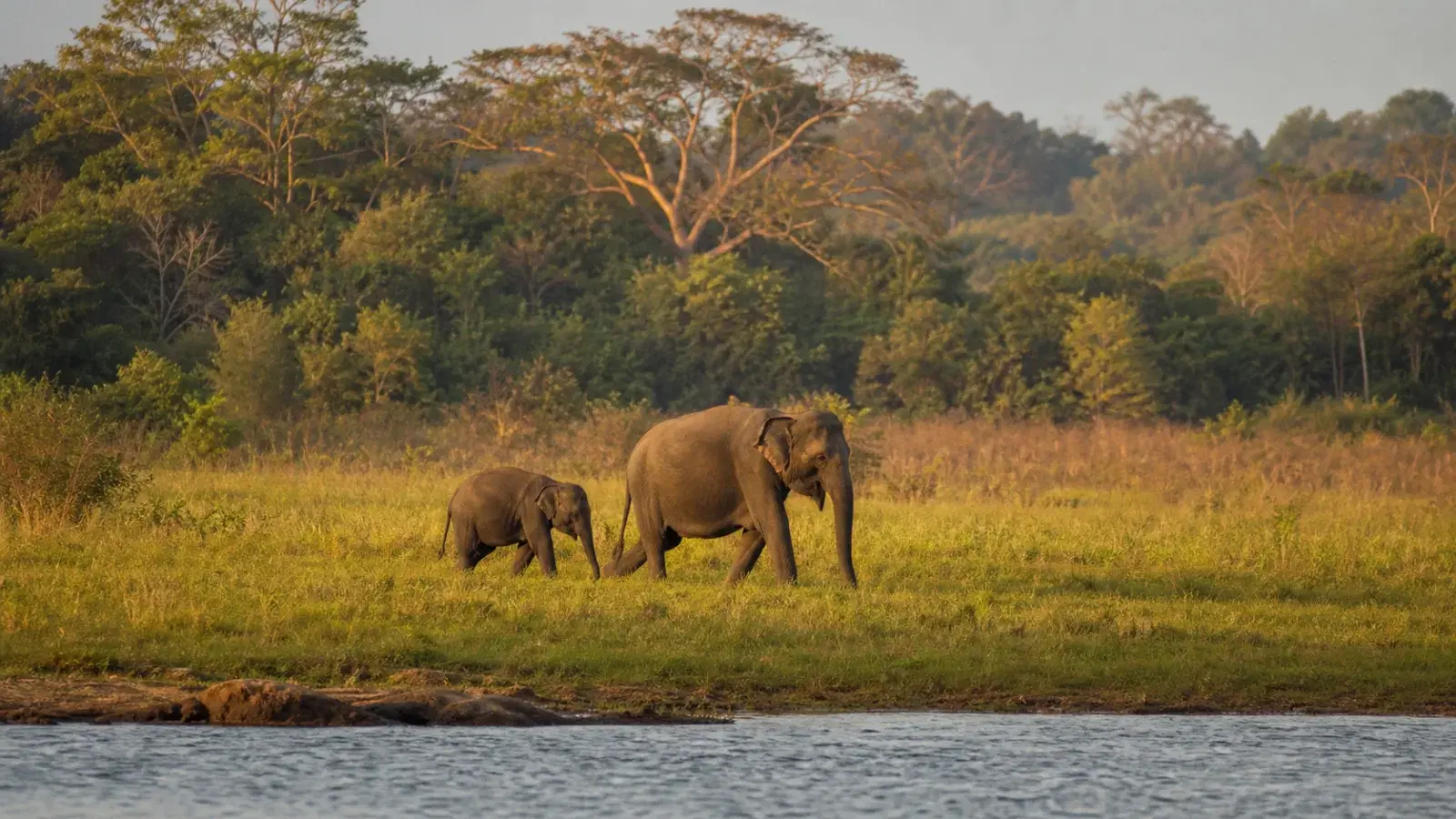
If you want a photograph with an elephant in Sri Lanka, the good news is that the best one available is a wild herd at a waterhole in Udawalawe, Minneriya, Kaudulla or Wilpattu, photographed from a vehicle at a respectful distance. It is also, by some margin, the more impressive image.

Bathing has replaced riding as the marketed 'ethical' optionIt requires control the animal has not chosenBathing is a welfare requirement, not a tourist serviceHand-feeding habituates animals to humansReal conservation volunteering is unglamorousWild herds make far better photographs anyway

Temple Elephants and Peraheras: Cultural Complexity

If you attend a perahera — the Kandy Esala Perahera being the most famous — you will see caparisoned elephants walking in procession at night amid drummers, dancers and fire. It is genuinely one of the great cultural spectacles in Asia, and it also raises welfare questions that Sri Lankans themselves actively debate.

This is not a foreign concern imposed on a local tradition. Sri Lankan conservationists, veterinarians and commentators have raised these issues in the national press for years, and the 2021 regulations addressed pageant elephants directly by banning the use of baby elephants in them.

The specific concerns raised by specialists include the covering of elephants' ears with heavy decorative cloth, which interferes with thermoregulation, the noise and crowd density of a night procession, the chaining of animals between appearances, and the hours spent standing in position.

Set against that is a tradition of enormous religious significance, in which the elephants carrying the sacred relic occupy a position of genuine honour, cared for by mahouts who in many cases have long relationships with individual animals.

We do not think there is a clean answer here, and we are suspicious of foreign writing that offers one. What we would say is that attending a perahera is a legitimate cultural choice, and that watching attentively rather than uncritically is part of engaging with it honestly.

If you attend one: never use flash photography near the elephants, do not push toward them for photos, keep well back from the route where the animals pass, and follow steward instructions immediately. A startled elephant in a dense crowd is a serious danger to everyone including itself.

Peraheras are of deep religious significanceWelfare concerns are raised by Sri Lankans, not just outsidersEar coverings interfere with thermoregulation2021 law banned baby elephants in pageantsNo flash photography near the animalsKeep well back from the procession route

Turtle Hatcheries: The Most Contested Attraction on the Coast

Five of the world's seven sea turtle species nest on Sri Lankan beaches — green, hawksbill, loggerhead, olive ridley and leatherback. Along the southwest coast you will pass a string of hatcheries offering tours, tanks of hatchlings and, frequently, the chance to release a baby turtle yourself.

This is the attraction where we found the widest gap between how it is marketed and what specialists actually say.

The strongest argument in favour is straightforward: egg poaching for consumption has been a serious threat, and hatcheries that collect eggs protect them from poachers, dogs and other predators. Some release thousands of hatchlings a year that would otherwise never have made it. Conservation organisations that work with well-run hatcheries consider them a net positive.

The criticisms are specific and come from credible sources. The first concerns the practice of buying eggs from poachers. It removes those eggs from the food market, but critics argue it creates a paid market for egg collection, giving poachers a guaranteed buyer and an incentive to take more nests rather than fewer.

The second concerns keeping hatchlings in tanks before release. Hatchlings absorb the remaining yolk before emerging, which provides the energy for a sustained swim out to deeper water where they are safer. Holding them in tanks for days can deplete that reserve before they ever enter the sea, potentially reducing survival at exactly the moment it matters.

The third concerns release timing. Hatchlings naturally emerge and run for the sea at night, when predation from birds is lowest. Daytime releases, scheduled around visitor convenience, expose them to far higher predation. Experienced observers advise that releases should happen after dark, or at minimum in the late evening.

The fourth concerns permanent captives. Many hatcheries hold adult or juvenile turtles in small concrete tanks, presented as rescued or disabled animals. Some genuinely are. In others, the tanks function primarily as a guaranteed sighting for paying visitors.

There is also a real evidence gap. Survival rates for released hatchlings are extremely difficult to measure, and honest commentators acknowledge that we do not actually know how much difference hatcheries make, or whether some practices cause net harm. That uncertainty is itself worth knowing.

Our practical position: if you visit a hatchery, choose one that releases only after dark, does not let visitors handle hatchlings, does not hold healthy adults in bare tanks, and can explain where its eggs come from. If it fails those tests, walk out — and say why at the desk.

Five of seven sea turtle species nest hereHatcheries do protect eggs from poaching and predatorsBuying eggs may create a market for collectionTank retention can deplete vital yolk energy reservesDaytime releases dramatically raise predationHealthy adults in bare concrete tanks are a red flagReal survival data is genuinely lacking

The Better Turtle Experience: Watching Wild Nesting

There is an alternative that sidesteps almost all of the above, and it is far more memorable than a tank tour.

At Rekawa, on the south coast near Tangalle, community-managed conservation turtle watches take place at night on the nesting beach itself. Under guided supervision, small groups wait in darkness for a female turtle to come ashore, haul herself up the sand, dig a nest and lay.

It is slow. You may wait an hour or two. There is no guarantee. Lights are strictly controlled because artificial light disorients both nesting females and hatchlings, so you will not be taking flash photographs.

That is precisely why it works. Nothing is arranged for you. The turtle is doing what turtles have done on that beach for a very long time, and you are being permitted to watch quietly.

The rules exist for good reasons and should be followed exactly: no white light, no flash, no touching, stay behind the guide, keep voices low, and do not stand between a turtle and the sea. A disturbed female will abandon the nesting attempt and return to the water.

Peak nesting varies by species and season, and the guides will know the current pattern. Ask before committing to a specific night, and go with a community-based programme where fees support local wardens who protect the nests the rest of the year.

If you have children, be honest with them beforehand that there may be nothing to see. Managing that expectation is part of teaching what wildlife watching actually is.

Night turtle watches at Rekawa near TangalleWild nesting, nothing stagedStrict light discipline — no flashSightings are never guaranteedFees support community nest protectionPrepare children for the possibility of no sighting

On Safari: Your Driver's Behaviour Is the Welfare Issue

Most travellers think of safari as the obviously ethical option, and in principle it is. In practice, how your jeep is driven has more effect on animals than almost anything else you will do.

The problem is well documented in Sri Lanka's most popular parks. A leopard sighting triggers radio calls. Within minutes a dozen jeeps converge, jostling for position, engines running, drivers reversing to give their clients a better angle. The animal is surrounded. Cubs are separated from mothers. Kills are abandoned.

This happens because the incentive structure rewards it. A driver who delivers a leopard photograph gets a large tip and a good review. A driver who hangs back at a respectful distance may deliver a less dramatic day.

You control that incentive. Say at the start of the drive, clearly and pleasantly, that you do not want to chase sightings, that you are happy to hang back, and that you would rather see ordinary animals behaving normally than crowd a leopard. Then tip well regardless of what you see. This is the single most effective thing an individual visitor can do inside a national park.

Other conduct that matters: stay inside the vehicle, keep noise down, no drone use over parks, never feed anything, and take all rubbish out. Plastic is banned in parks and the ban exists because animals eat it.

Around elephants specifically, keep real distance. Never allow a driver to position the vehicle between a herd and its calves, or to block a path an elephant is walking. If an elephant shows agitation — ears spread, head high, a mock charge — the correct response is to reverse away calmly and immediately.

Consider the quieter parks. Wilpattu, Gal Oya, Kumana and Bundala see far fewer vehicles than the busiest reserves, and the experience is generally better as well as less pressured for the animals. Bundala in particular is superb for birds and largely ignored by the crowds.

Go on the first drive of the morning where you can. Fewer vehicles, better light, more active animals.

Jeep crowding around leopards is a documented problemTell your driver you do not want sightings chasedTip well regardless of what you seeStay in the vehicle, no drones, no feedingReverse away from any agitated elephantQuieter parks give a better experienceTake the first drive of the morning

Other Encounters Worth Thinking About

Beyond elephants and turtles, a number of smaller attractions appear along tourist routes and deserve a moment's thought.

Snake charming and cobra displays appear at roadside stops and outside some heritage sites. Snakes used this way are frequently defanged or have their mouths sewn, and typically die within months. There is no version of this that is acceptable.

Staged monkey photographs — a macaque on a chain, dressed or costumed, offered for a photo fee — are straightforwardly exploitative and also carry a genuine bite and disease risk to you. Note also that feeding free-living monkeys at temples and viewpoints, however entertaining, creates aggressive animals that eventually get injured or culled.

Civet coffee, sometimes marketed to visitors, is produced in some regions by caging wild civets and force-feeding them coffee cherries. Sri Lanka is not a major producer, but if it is offered, the welfare record of the industry is poor.

Fish spas, where small fish nibble at feet, are common in tourist towns. The fish are typically kept in crowded tanks with short lifespans, and there are also documented hygiene concerns for humans.

Zoos and aquariums vary widely, as they do everywhere. Apply the five-question test rather than a blanket rule.

Whale and dolphin watching deserves its own treatment and we have covered it separately, because operator behaviour — approach distance, engine handling, the number of boats crowding a single animal — determines whether a trip is benign or harmful. Swimming with whales is prohibited under Sri Lankan regulations, and any operator offering it is breaking the law.

A general principle covers most of these: if an animal is being made to do something it would not otherwise do, in order to produce a moment for you, that is the thing to walk away from.

Snake charming: never acceptableStaged monkey photos exploit and risk diseaseDo not feed temple or roadside monkeysCivet coffee has a poor welfare recordFish spas raise welfare and hygiene concernsSwimming with whales is prohibited by law

The Story Behind the Statistics: Human-Elephant Conflict

This is the context that reframes everything above, and it is almost entirely absent from tourism marketing.

Sri Lanka records one of the highest rates of elephant mortality linked to human-elephant conflict anywhere in the world. Reporting to parliament put the 2015 to 2024 toll at nearly 1,195 human deaths and 3,484 elephant deaths. Annual human fatalities have run in the range of roughly 110 to 180 in recent years. In 2023 the country recorded 488 elephant deaths, among the highest figures on record, and reporting in 2026 indicated 128 elephants killed within the first four and a half months of the year alone.

The causes are grim and specific. Analysis of deaths across 2012 to 2024 identified gunshots and hakka patas — improvised explosive devices concealed in food that detonate in the animal's mouth — as the leading killers, at over 800 and over 700 deaths respectively. Electrocution and poisoning also feature. Train collisions have killed well over a hundred elephants since 2012, including a single incident near Minneriya in February 2025 in which a passenger train struck a herd and killed six animals, four of them calves.

The driver is habitat. Forest has been converted for agriculture, settlement and infrastructure, fragmenting the corridors elephants have used for generations. Animals that find their traditional route now runs through a village do not stop needing to travel. Farmers whose entire year's crop can be destroyed in one night are not villains either; they are people defending a livelihood with the tools available.

Why does this belong in a tourism article? Because it determines what your money actually does. Tourism revenue is one of the few forces that gives a rural Sri Lankan community a concrete economic reason to tolerate living elephants nearby. When park fees, guide wages, homestay income and village-based tourism flow into communities on the edge of elephant range, the calculation changes.

That is the argument for choosing community-based guides, staying in locally owned accommodation near park areas, eating locally, and paying properly for wildlife experiences rather than hunting for the cheapest jeep. It is a less photogenic form of conservation than releasing a hatchling, and considerably more consequential.

Roughly 1,195 people and 3,484 elephants killed 2015–2024488 elephant deaths recorded in 2023128 elephants killed in early 2026 aloneGunshots and hakka patas are leading causesHabitat fragmentation is the underlying driverCommunity tourism income changes local incentives

What Genuinely Good Wildlife Experiences Look Like Here

Having spent most of this article on caution, it is worth being clear that Sri Lanka offers some of the finest wildlife experiences in Asia, and that most of them raise no ethical difficulty whatsoever.

A dawn drive in a dry-zone national park, watching a herd move to water, with your driver keeping distance and the engine off. Nothing about this needs justifying.

The seasonal gathering of elephants around the receding reservoir waters in the Minneriya and Kaudulla area, which brings together one of the largest congregations of Asian elephants anywhere. It is a wild phenomenon on a wild timetable.

Birdwatching. Sri Lanka has a remarkable number of endemic bird species, concentrated in the southwestern rainforest and wetland reserves, and birding is close to a zero-impact activity. Bundala's lagoons and salt pans in the south are outstanding and quiet.

A guided rainforest walk in the southwest, where the reward is endemic frogs, lizards, butterflies and birds rather than a big cat. Slow, close-focus wildlife watching is deeply underrated here.

A night turtle watch at a community-managed nesting beach.

Simply walking, with a guide who knows what to look for, in a wetland or forest reserve. Some of the best wildlife encounters in Sri Lanka involve no vehicle and no ticket booth.

The pattern connecting all of these: the animal is wild, free to leave, and doing what it would be doing whether or not you had arrived. That is the whole test, really.

Dawn drives with distance keptThe seasonal elephant gathering in the dry zoneEndemic birdwatching, close to zero impactRainforest walks for small wildlifeCommunity-run night turtle watchesThe animal should be free to leave

If You Already Did Something You Now Regret

A short section, because we suspect some readers arrived here after the fact.

If you rode an elephant on a previous trip, bathed one, held a hatchling in daylight, or paid for a photograph with a chained animal, the useful response is not guilt. Most people who do these things were sold them by someone with no incentive to explain the issues, at a moment when they had no way to research it.

What is useful is what you do with it. Leave an honest review describing what you actually saw, without exaggeration. Tell friends who are planning trips. Choose differently next time. If you posted a photograph that is now driving other people toward the same experience, consider taking it down or adding context.

That last one matters more than people realise. Social media is a substantial driver of demand for animal contact experiences. A single popular photograph of someone hugging an elephant calf sends more visitors than any advertisement.

None of this requires performative regret. It requires being one of the people who asks at the ticket desk, and one of the people whose review mentions the concrete tank.

Guilt is not the useful responseMost visitors were never given the informationLeave honest, specific reviewsConsider removing or contextualising old photosSocial media drives demand for contact experiences

Supporting Conservation in Ways That Actually Work

If you want your trip to leave Sri Lankan wildlife better off, some approaches are far more effective than others.

Pay properly for national park entry and guides. Park fees fund the Department of Wildlife Conservation's work. Bargaining a jeep down to the lowest possible price mostly comes out of the driver's income, and drivers under financial pressure are the ones who chase sightings.

Hire a genuinely knowledgeable naturalist guide rather than the cheapest available option. A good guide transforms what you see, and creates local employment that depends directly on wildlife remaining alive and visible.

Stay in and buy from communities near wildlife areas. Homestays, village-run restaurants and locally owned lodges spread tourism income to precisely the households that bear the costs of living alongside elephants.

Visit the quieter parks. Spreading visitors reduces pressure on the busiest reserves and brings income to areas that currently see very little.

Support established conservation and research organisations directly if you want to donate. Sri Lanka has serious scientific bodies working on human-elephant conflict mitigation, and a modest donation to research or fencing programmes does more than an entry fee at a commercial facility.

Refuse politely and say why. When you decline a contact experience, tell the operator that is the reason. Commercial operators respond to demand signals far faster than to regulation.

And carry your rubbish out, refuse single-use plastic, and never leave food where wildlife can reach it. Unglamorous, but it is the version of conservation everyone can do every day.

Pay properly for park fees and guidesHire real naturalists, not the cheapest optionStay and spend in communities near parksVisit quieter reserves to spread pressureDonate to research and mitigation programmesSay why when you decline an experience

Советы путешественникам

  • Apply the five-question test at the gate of any wildlife attraction before buying a ticket
  • Ask directly how many animals a facility released into the wild last year
  • Do not ride an elephant, and decline elephant-back safaris
  • Treat bathing and hand-feeding experiences as contact experiences, not welfare activities
  • Look for four-leg chaining, working calves, and heavy cloth in midday heat — the 2021 law gives you a checklist
  • At a turtle hatchery, check that releases happen after dark and that visitors do not handle hatchlings
  • Prefer a wild night nesting watch over a hatchery tour where you can
  • Tell your safari driver at the start that you do not want sightings chased, then tip well anyway
  • Choose quieter national parks to reduce pressure and improve your own experience
  • Take the first drive of the morning for fewer vehicles and more active animals
  • Never feed monkeys at temples or viewpoints, however harmless it seems
  • Avoid snake charmers, staged animal photographs, civet coffee and fish spas
  • Never use flash photography around elephants, nesting turtles or hatchlings
  • No drones over national parks
  • Refuse politely and tell the operator why — demand signals travel faster than regulation
  • Spend on local guides, homestays and village businesses near wildlife areas

Частые вопросы

Is elephant riding banned in Sri Lanka?

No. It is regulated rather than prohibited. Regulations introduced in 2021 limit riding to a maximum of four people at once on a well-padded saddle, among other welfare rules. We would still advise against riding, because the training required to make an elephant reliably carry strangers is the underlying concern, not the ride itself.

Are Sri Lanka's elephant orphanages ethical?

It depends heavily on the model. Facilities that permanently house and breed elephants without releasing any animals face persistent criticism over chaining, crowding and commercial contact experiences. Rehabilitation facilities that raise orphaned calves with minimal human contact and release them in groups are structurally different. Ask how many animals were released last year — the answer identifies which model you are supporting.

What is the difference between an elephant orphanage and an elephant transit home?

An orphanage provides permanent lifelong care and animals are not returned to the wild. A transit home raises orphaned calves with deliberately limited human contact and releases them into the wild as a cohort once old enough. At a transit home you generally watch feedings from a distance and cannot touch or interact with the animals, which is precisely the point.

Is elephant bathing better than elephant riding?

It is marketed that way, but it is still a contact experience. Bathing sessions require an elephant to stand still while unfamiliar people handle it, on a schedule set by bookings and under a mahout's control. Sri Lankan regulations already mandate a daily bath as a welfare requirement, so it is something the animal needs rather than a service tourists must provide.

Are turtle hatcheries in Sri Lanka ethical?

They are genuinely contested. Hatcheries do protect eggs from poaching and predation, and some conservation groups consider well-run ones a net positive. Credible criticisms include buying eggs from poachers, which may create a market; holding hatchlings in tanks, which can deplete the yolk energy they need to swim to deeper water; and daytime releases scheduled around visitors, which increase predation. Survival data is genuinely lacking.

What should I look for in a good turtle hatchery?

Releases only after dark, no visitor handling of hatchlings, no healthy adult turtles kept in small bare concrete tanks, a clear explanation of where the eggs come from, and clean adequately sized facilities for any genuinely rescued animals. If a hatchery fails these tests, leave and say why at the desk.

Where can I see wild turtles nesting in Sri Lanka?

Rekawa, on the south coast near Tangalle, runs community-managed night turtle watches on the nesting beach itself. You wait in the dark under guided supervision for a female to come ashore and lay. Sightings are not guaranteed, lights are strictly controlled, and no touching is permitted — which is exactly what makes it a better experience.

Is going on safari ethical in Sri Lanka?

In principle yes, but driver behaviour is the deciding factor. Jeep crowding around leopard sightings is a documented problem in the busiest parks, with animals surrounded, cubs separated and kills abandoned. Tell your driver upfront that you do not want sightings chased, tip well regardless of what you see, and consider visiting quieter parks.

How serious is human-elephant conflict in Sri Lanka?

Very. Reporting to parliament put the 2015 to 2024 toll at nearly 1,195 human deaths and 3,484 elephant deaths. In 2023 the country recorded 488 elephant deaths, and 2026 reporting indicated 128 elephants killed in the first four and a half months alone. Habitat fragmentation is the underlying driver.

How many wild elephants are left in Sri Lanka?

Estimates based on a 2024 census put the wild population at roughly 6,000 to 7,000, compared with around 14,000 in the nineteenth century. Around 200 elephants are held in registered captivity.

What does Sri Lankan law say about captive elephants?

Regulations introduced in 2021 require photo identity cards with a DNA stamp, a mandated daily bath of two and a half hours, and a ban on work for baby elephants including in cultural pageants. Logging elephants may not work more than four hours a day and night work is prohibited. Specialists have welcomed the framework while questioning enforcement and noting gaps such as ear coverings and four-leg chaining.

Should I attend a perahera given the elephant welfare concerns?

This is a genuine cultural tradition of deep religious significance, and the welfare debate is one Sri Lankans themselves are actively having. We do not think there is a clean answer. If you attend, never use flash photography near the elephants, keep well back from the route, and follow steward instructions immediately.

Can I swim with whales in Sri Lanka?

No. Swimming with whales is prohibited under Sri Lankan regulations. Any operator offering it is breaking the law, which also tells you what to expect of their conduct around the animals generally.

What is the single most effective thing I can do for Sri Lankan wildlife as a visitor?

Direct your spending toward communities living alongside wildlife. Pay full park fees, hire knowledgeable local naturalist guides, stay in locally owned accommodation near reserves, and tip properly. Tourism income is one of the few forces that gives rural households an economic reason to tolerate living elephants nearby.

Is it safe to visit wildlife areas with children?

Yes, with sensible precautions. Stay inside vehicles on game drives, keep noise down, never feed any animal including monkeys, and prepare children in advance that wild sightings are never guaranteed. Contact-free experiences such as transit home viewings and guided wetland walks work well for families.

Заметки читателей

Присоединяйтесь к обсуждению

Поделитесь вопросом, советом или опытом поездки по этому гиду.

Комментарии

0 комментариев

Загрузка...

Готовы превратить вдохновение в поездку на Шри-Ланку?

Используйте LankaTrip, чтобы спланировать путешествие, связаться с местными гидами и воплотить этот маршрут в реальность.

Нужна помощь с планированием?

Спланируйте приключение на Шри-Ланке

Спланировать поездку