
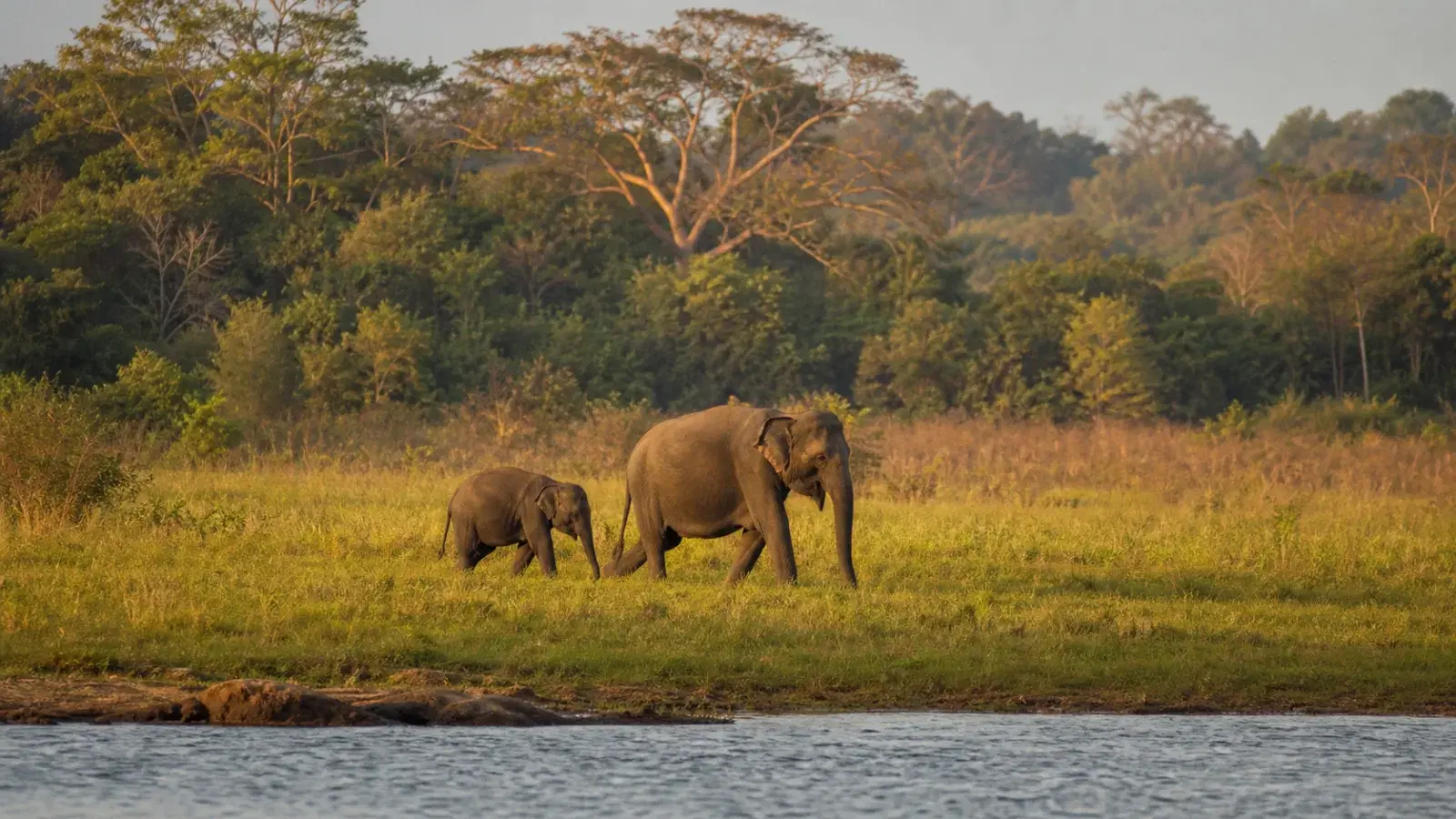
There is a photograph almost every visitor to Sri Lanka is offered the chance to take. It might be an elephant being bathed in a river while you pour water over its back. It might be a hatchling turtle in your palm, seconds before it is carried to the sea. It might be a leopard, framed between the roll bars of a jeep that has just accelerated into position ahead of six others.
All three feel, in the moment, like a connection with something wild and wonderful. Two of the three are genuinely contested, and the third depends entirely on how your driver behaves in the ninety seconds after the sighting.
This is a harder subject than most travel guides admit. The comfortable version says 'avoid elephant riding, everything else is fine'. The reality in Sri Lanka is considerably more tangled, because the country sits at an unusual intersection: extraordinary biodiversity, deep cultural traditions involving captive elephants, a serious conservation crisis in the countryside, and a tourism economy that many rural families genuinely depend on.
We are not going to tell you that every animal attraction is cruel, because that is not true and it is not useful. Nor are we going to reassure you that your entry fee automatically funds conservation, because that is frequently not true either.
What we will do is lay out what Sri Lankan law actually requires, what the credible criticisms are and who is making them, where the genuine uncertainty sits, and give you a practical test you can apply at the gate of any facility — including ones that did not exist when this article was written.
One note on how we have written this. Our standing policy on this site is that we do not name or recommend specific businesses, and that matters more here than anywhere. An article that named three 'ethical sanctuaries' would be out of date within a year, and would quietly become advertising. Criteria age far better than recommendations.
त्वरित सारांश
- Sri Lanka has roughly 6,000 to 7,000 wild elephants and around 200 registered captive ones
- A 2021 animal protection law introduced real welfare rules for captive elephants, including biometric ID cards, a mandated daily bath, and a ban on working elephants under five
- Elephant riding is regulated rather than banned — but regulation is not the same as it being a good idea
- The critical distinction is between permanent-captivity 'orphanage' models and rehabilitation-and-release 'transit home' models
- Turtle hatcheries are the single most contested attraction, with credible criticism around egg-buying, tank retention and daytime releases
- Watching wild turtles nest at night, under guided supervision, is generally considered the better experience
- Between 2015 and 2024 an estimated 1,195 people and 3,484 elephants were killed in human-elephant conflict
- In 2026, reporting indicated 128 elephants killed in just the first four and a half months
- Your safari driver's behaviour matters more to animal welfare than which park you choose