LankaTrip Insights

29 min de lecture

Driving Yourself in Sri Lanka in 2026: Permits, Tuk-Tuk Rules, and What Most Travelers Get Wrong

Renting a tuk-tuk or scooter looks like the ultimate Sri Lankan road trip. Before you book, understand the permit system, the unresolved legal argument over foreigners driving three-wheelers, and what actually happens to your insurance if it goes wrong.

Retour au blog
Driving Yourself in Sri Lanka in 2026: Permits, Tuk-Tuk Rules, and What Most Travelers Get Wrong

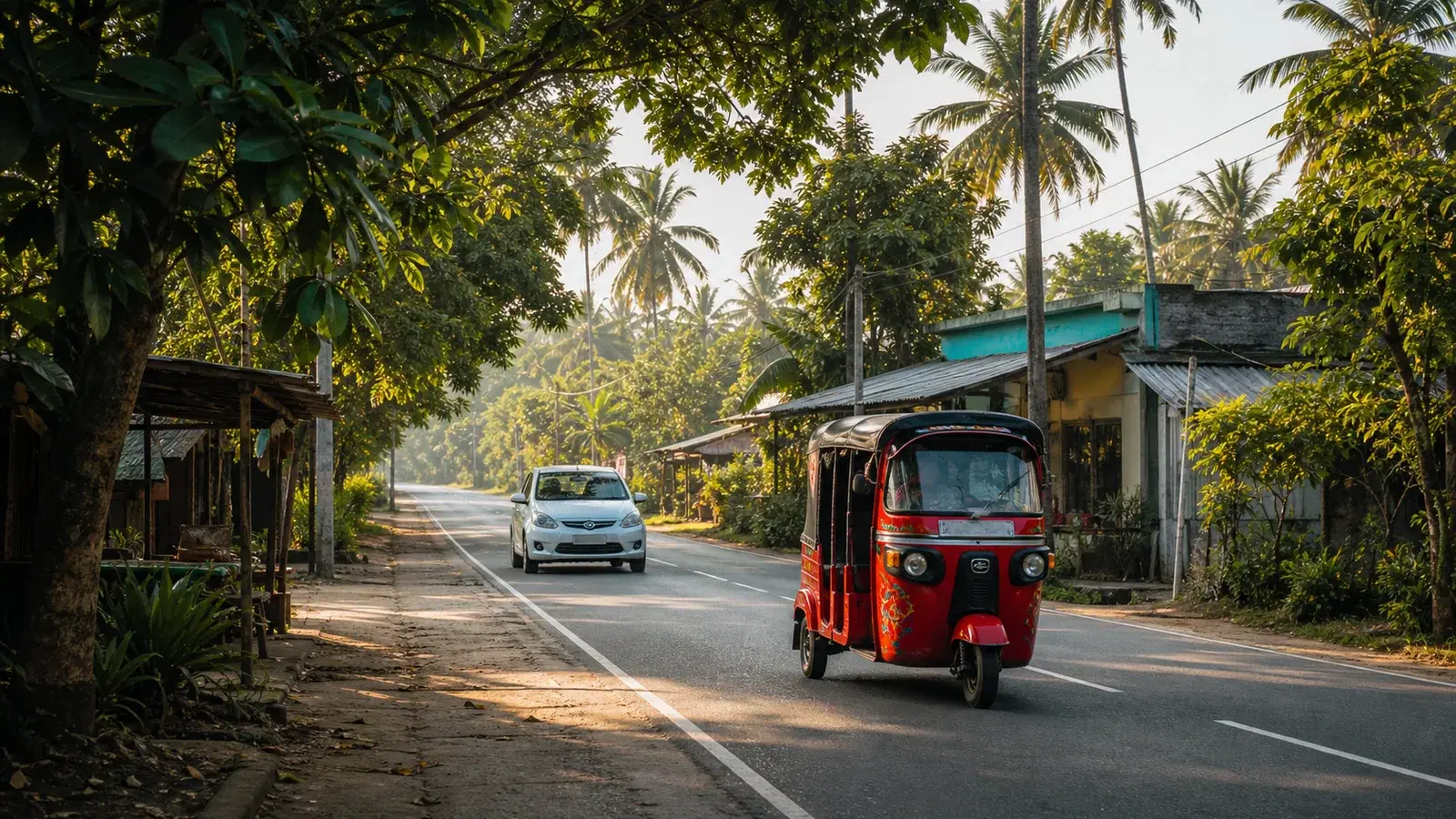
There is a version of the Sri Lankan road trip that circulates widely on social media. A rented tuk-tuk, a coastal road, a stack of luggage in the back, and two people who have never driven a three-wheeler in their lives grinning at a camera on a tripod.

It looks wonderful. It is also, legally and practically, considerably more complicated than the rental listings suggest.

Sri Lanka's rules for foreign drivers have changed repeatedly since 2024. An on-arrival licence service was introduced at Bandaranaike International Airport. The Automobile Association of Ceylon tightened its requirements in March 2025. In November 2025 the Police Media Spokesperson publicly stated that tourists driving three-wheelers was illegal, a claim that rental operators immediately and publicly disputed on the basis of Sri Lanka's treaty obligations.

The result is a genuinely confusing landscape in which a traveler can read five articles and get five different answers, several of them written by companies with an obvious commercial interest in the answer being yes.

This guide does not have a commercial interest in your answer. We do not rent vehicles and we do not name or recommend any rental business. What follows is an attempt to lay out what is clear, what is contested, and what the actual risks are, so you can make your own decision with your eyes open.

It also covers the part almost nobody writes about honestly: what Sri Lankan roads are actually like to drive on, and why a large number of experienced visitors who could self-drive choose not to.

L'essentiel

  • Your home country licence alone does not entitle you to drive in Sri Lanka
  • An International Driving Permit alone is also not sufficient on its own
  • You need a locally issued permit, obtained either at the airport counter or through the Automobile Association of Ceylon
  • The Department of Motor Traffic operates a counter in the arrivals area at Bandaranaike International Airport
  • Since 30 March 2025 the AA Ceylon route requires you to already hold an International Driving Permit
  • Whether tourists may legally drive tuk-tuks is genuinely disputed between police statements and rental operators
  • Insurance is the real risk. Driving without a valid local permit can void cover entirely
  • For most visitors, a car with a driver costs less than people expect and removes the entire problem

Can Foreigners Drive in Sri Lanka at All?

Yes. Foreign visitors can legally drive in Sri Lanka. The complication is not whether you may, but what paperwork you need before you do.

The single most important thing to understand is that your home country driving licence, on its own, does not authorise you to drive on Sri Lankan roads. Neither does an International Driving Permit on its own. Both are inputs into a local process, not substitutes for it.

What you need is a locally issued document. In practice there are two routes to one: a temporary driving licence issued by the Department of Motor Traffic, or a recognition permit issued by the Automobile Association of Ceylon.

In November 2025 the Police Media Spokesperson publicly reminded foreign nationals that those without a valid International Driving Permit or a home country licence are not permitted to drive any vehicle in Sri Lanka, and urged rental businesses and hotels to check visitors' documents before handing over vehicles, particularly three-wheelers.

That statement was aimed at a real problem. Investigations had found that a significant number of foreign visitors involved in road accidents did not hold valid documents to operate the vehicles they were driving.

So the short version is this: driving is permitted, driving without local paperwork is not, and enforcement attention has increased rather than decreased.

Foreigners can legally drive in Sri LankaA home licence alone is not sufficientAn International Driving Permit alone is not sufficientA locally issued permit or temporary licence is requiredPolice have publicly increased attention on this since late 2025

Route One: The Temporary Licence at the Airport

The most convenient route for most arriving travelers is the Department of Motor Traffic counter at Bandaranaike International Airport.

The counter sits in the arrivals area and, according to available information, operates around the clock. It issues a temporary Sri Lankan driving licence on the spot, which allows you to drive light vehicles and motorcycles during your stay.

The documents you will be asked for typically include your passport with a valid visa or entry permit, and your original full home country driving licence. Provisional, learner, probationary and temporary licences are not accepted. If your licence is not in English, you will need a certified translation or an International Driving Permit.

Reported fees and validity periods vary between sources and appear to have changed more than once. Figures circulating for the on-arrival service have ranged from around 25 US dollars for a one-month permit up to several hundred for a full year, with other reports quoting a flat rupee fee for a permit valid up to five months. We are not going to pretend to certainty here. Budget in the region of 25 to 75 US dollars for a typical holiday-length permit and confirm the current fee at the counter.

Conditions attached to your home licence carry over. If you are restricted to automatic transmission at home, you are restricted to automatic transmission in Sri Lanka.

The most important limitation, and the one that catches out the exact travelers who most want to drive: reporting consistently indicates that this on-arrival permit covers cars and motorcycles, not three-wheelers. If a tuk-tuk is the whole point of your trip, the airport counter does not solve your problem.

As of February 2026, the temporary licence service for international permit holders was reported to have expanded beyond Werahera and the airport to district offices including Kurunegala, Hambantota, Gampaha, Anuradhapura and Jaffna, which helps travelers who decide to drive partway through a trip.

Department of Motor Traffic counter in the BIA arrivals areaReported to operate 24 hoursRequires passport, visa and a full home country licenceNon-English licences need a certified translation or an IDPCovers cars and motorcycles, but reportedly not three-wheelers

Route Two: The AA Ceylon Recognition Permit

The longer-established route is the recognition permit issued by the Automobile Association of Ceylon in Colombo, sometimes called a covering permit.

This document does not replace your licence. It endorses your International Driving Permit for use on Sri Lankan roads, and it is the route most commonly discussed in connection with three-wheelers and less standard vehicle categories.

The critical change happened on 30 March 2025. Before that date, you could present a home country driving licence at the AA Ceylon office and obtain a recognition permit. Since that date, AA Ceylon issues recognition permits only to holders of a valid International Driving Permit. A national licence alone is no longer accepted.

This matters enormously for planning, because you cannot obtain an International Driving Permit in Sri Lanka. It must be issued in your home country, usually by your national automobile association, before you travel. In many countries this takes a day or two. In some it takes weeks. If you think there is any chance you will want to drive, apply before you leave.

Reported fees for the recognition permit vary between sources, commonly quoted in the range of roughly 7,000 to 8,500 Sri Lankan rupees, or around 25 to 35 US dollars, with processing typically taking two to four hours on the same day. Validity generally matches your IDP and visa.

Office hours are limited to weekday business hours, which means arriving on a Friday evening leaves you waiting until Monday. Bring your passport, visa, original licence, IDP and passport photographs.

One practical note: a number of online services offer to arrange this permit on your behalf for a markup. That may be convenient, but it also introduces a layer between you and the issuing authority. If you use one, verify the document you receive is what you were promised before you drive on it.

Issued by the Automobile Association of Ceylon in ColomboSince 30 March 2025 an International Driving Permit is mandatory for this routeYou cannot obtain an IDP inside Sri Lanka. Get it before you travelReported cost roughly 7,000 to 8,500 rupees, processed in a few hoursWeekday office hours only

Get Your International Driving Permit Before You Fly

If there is one piece of advice in this article to act on immediately, it is this one, because it is the only step you cannot fix after arrival.

An International Driving Permit is not a licence. It is a standardised multilingual translation of your existing licence, issued under international road traffic conventions. It is only valid alongside your original licence, which you must also carry.

It is issued by your home country, usually through the national automobile association or licensing authority. Processing times vary widely, from same-day counter service in some countries to several weeks by post in others.

Sri Lanka's requirements interact with this in a way that trips people up. The airport route can work without an IDP if your licence is in English. The AA Ceylon route cannot work without one at all since March 2025. Since most travelers do not know in advance which route they will end up using, and since the IDP is inexpensive and valid for a year, the sensible move is simply to get one.

Bring the physical booklet. Some processes accept digital versions and some explicitly do not, and rental operators frequently ask to see the original.

Check the expiry on your home licence too. Some processes require your national licence to remain valid for at least a year from the date of application, which is easy to overlook.

An IDP is a translation, not a licence, and must be carried with the originalIt cannot be obtained inside Sri LankaMandatory for the AA Ceylon recognition permit route since March 2025Bring the physical booklet, not only a digital copyCheck that your home licence has enough validity remaining

The Tuk-Tuk Question: Genuinely Disputed, and Here Is Both Sides

This is the section most articles on this topic handle badly, usually because the article is published by a company that rents tuk-tuks.

The honest position is that the legality of foreign tourists driving three-wheelers in Sri Lanka is currently contested, and we cannot give you a clean answer because one does not exist.

The police position: in November 2025 the Police Media Spokesperson stated publicly that tourists driving three-wheelers was illegal, describing the widespread use of trishaws by tourists as a problem, and urged rental businesses to verify documents. Some reporting indicated that the position taken was that an International Driving Permit or an AA Ceylon endorsement does not by itself authorise a foreigner to operate a three-wheeler, and that a specific three-wheeler endorsement from the Department of Motor Traffic is required, in some accounts involving a written and practical test.

The rental industry position: operators responded that Sri Lanka has been a contracting party to the 1949 Geneva Convention on Road Traffic since 1957, and argued that a foreign national holding a valid International Driving Permit with the appropriate category, properly endorsed locally, is entitled to operate the corresponding vehicle including a three-wheeler. Industry representatives have argued that the police statement conflicted with longstanding law.

Both positions are being argued in good faith by people who know the system better than any foreign visitor will. The dispute appears to turn on how national Sri Lankan licence categories map onto international permit categories, and on the differing frameworks of the 1949 Geneva and 1968 Vienna conventions.

What this means for you in practice is more important than who is right. Even if the legal argument eventually resolves in the rental industry's favour, you are the one who has to deal with a roadside police officer, an insurer, or a hospital in the meantime.

The concrete risks are: being stopped and fined or having the vehicle impounded; having your travel insurance decline a claim on the grounds that you were operating a vehicle you were not licensed for; and, in an accident involving another party, facing liability without valid cover.

Our position, and we would rather state it plainly than hedge: if you want to drive a tuk-tuk in Sri Lanka, obtain the specific three-wheeler endorsement through the Department of Motor Traffic and treat anything less as an unresolved risk. If you are not prepared to do that, hire a tuk-tuk with its driver instead. It costs less, it supports a local driver, and the experience of sitting in the back of one on a coastal road is not meaningfully diminished.

Police stated in November 2025 that tourists driving three-wheelers is illegalRental operators dispute this, citing the 1949 Geneva ConventionThe dispute turns on how licence categories map across conventionsThe practical risk sits with you, not with either side of the argumentThe safest route is a specific DMT three-wheeler endorsement, or hiring with a driver

Scooters and Motorbikes: Easier, but Read the Engine Size

Two wheels is the most common self-drive choice among foreign visitors, and the paperwork is generally simpler than for three-wheelers.

The on-arrival temporary licence at the airport is reported to cover motorcycles as well as light vehicles, which makes it the straightforward route for most riders.

The catch is category. Your home licence must include the motorcycle category, and the entitlement carries over with its limitations. A car-only licence does not entitle you to ride a motorcycle in Sri Lanka any more than it does at home, regardless of what a rental shop is willing to hand over.

Engine size matters more than people expect. Many rental scooters in Sri Lanka exceed 100cc, which in most licensing systems requires a full motorcycle entitlement rather than a basic one. Check what your home licence actually permits before assuming you are covered.

Helmets are legally required and are enforced. Beyond the law, this is the single highest-value safety decision you will make on a Sri Lankan road. Rental helmets are often poor quality. If you are riding for more than a few days, consider bringing your own.

Motorcycles are prohibited on Sri Lanka's expressways, along with three-wheelers, so a two-wheeled trip is confined to the older road network. This significantly lengthens some journeys, particularly Colombo to the south coast.

Riding gear is worth thinking about even in heat. Road rash from a low-speed slide on gravel is a genuinely trip-ending injury, and the combination of shorts, sandals and an unfamiliar bike is responsible for a great many visitor hospital admissions.

The airport temporary licence reportedly covers motorcyclesYour home licence must carry the motorcycle categoryMost rental scooters exceed 100cc and may need a full entitlementHelmets are legally required and rental helmets are often poorMotorcycles are banned from the expressway network

Self-Drive Car Versus a Car With a Driver

This is the decision point where a lot of visitors make an assumption that does not hold in Sri Lanka.

In most countries, hiring a car with a driver is a luxury option well beyond the cost of self-drive. In Sri Lanka the gap is much narrower, because local labour costs are low relative to vehicle rental and fuel. For a multi-stop itinerary, a car with a driver frequently works out at a comparable total once you account for rental, fuel, permits, insurance excess and parking.

What you gain with a driver is substantial and often underrated. You skip the permit process entirely. You get someone who knows which mountain road is closed for landslide repair this week. You get local knowledge that no mapping application carries, and someone who can negotiate, translate and problem-solve when something goes wrong.

What you lose is spontaneity and privacy. Some travelers find the constant presence of a driver a poor fit for how they like to travel, particularly on longer trips, and that is a legitimate preference rather than a failure of nerve.

Self-drive makes most sense for travelers staying in one region for an extended period, for confident drivers with experience of dense mixed traffic in South or Southeast Asia, and for those who have driven on the left before.

It makes least sense for first-time visitors on a two-week island loop. That itinerary involves long days, unfamiliar roads, mountain sections and a great deal of navigation, and it is precisely the trip where a driver adds the most value.

One middle path worth knowing about: many travelers use a driver for the long inter-city transfers and rent a scooter locally once they are based somewhere, which gives freedom where it matters and avoids the hardest driving.

The cost gap between self-drive and a driver is smaller than in most countriesA driver removes the permit process entirelyLocal knowledge is worth more than mapping apps on hill roadsSelf-drive suits confident drivers staying in one regionA common compromise is a driver for transfers and a scooter locally

Insurance: The Risk Nobody Reads Until It Is Too Late

If you take one practical concern away from this article, make it this one, because the financial exposure is far larger than any fine.

Most travel insurance policies exclude claims arising from operating a vehicle you were not legally licensed to drive in the country you were in. That exclusion is standard, it is enforced, and it does not care that a rental shop assured you it was fine.

This applies in two directions. It applies to your own medical costs if you are injured, and it applies to third-party liability if you injure someone else or damage their property. In a country where road traffic injuries are common and medical evacuation is expensive, the second is the larger risk.

Rental vehicle insurance in Sri Lanka is frequently minimal. Third-party cover may be present at legal minimum levels. Comprehensive cover with a low excess is much rarer than in European or North American rental markets, and the excess on what is offered can be high relative to the vehicle value.

Read what is actually included before you sign. Ask specifically whether cover remains valid for a foreign driver, on what documents, and what the excess is. Ask what happens if the vehicle is damaged with no third party involved, which is the most common scenario.

Check your own policy too. Many policies exclude motorcycles entirely, or exclude them above a specified engine capacity, or require that a helmet was worn. Some exclude three-wheelers by name. These exclusions are usually in the small print rather than the summary.

The uncomfortable conclusion is that the tuk-tuk legal dispute discussed earlier is not really a legal problem for the average traveler. It is an insurance problem. If the legality is contested, an insurer has a straightforward argument for declining, and you would be litigating that from a hospital bed in a country whose legal system you do not know.

Most policies exclude claims from unlicensed drivingThird-party liability is the larger financial exposureRental insurance in Sri Lanka is often minimal with high excessesMany policies exclude motorcycles above a certain engine sizeContested legality gives an insurer an easy reason to decline

What Sri Lankan Roads Are Actually Like

Sri Lankan roads are not dangerous because they are badly built. Many are in good condition. They are demanding because of what shares them with you.

Traffic is dense, mixed and fast-moving in a way that has its own internal logic. Buses drive assertively and expect to be given way to, and experienced local drivers simply yield rather than contesting the point. Three-wheelers occupy gaps you would not have considered a gap. Motorcycles overtake on both sides. Pedestrians, cyclists, dogs and occasionally livestock are part of the traffic mix rather than exceptions to it.

Overtaking on blind bends is common practice on rural roads, and oncoming vehicles on your side of the road are a normal occurrence rather than an emergency. Defensive driving here means expecting that rather than being surprised by it.

The horn is used constantly and is informational rather than aggressive. A short toot usually means I am here or I am passing. Foreign drivers often read it as hostility and it is almost never that.

Hill country roads are the hardest driving in the country. They are narrow, steeply cambered, frequently wet, and often have unprotected drops. Add mist, buses taking the full width of a hairpin, and ongoing landslide repair works following the 2025 cyclone, and it becomes genuinely serious driving. Journey times between highland towns regularly exceed what mapping applications estimate.

Night driving is best avoided. Lighting is limited outside towns, unlit pedestrians and cyclists are common, and oncoming full-beam headlights are the norm. Almost every experienced visitor who self-drives here arrives at the same rule independently: be off the road by dark.

The expressways are a different world entirely. The Southern, Outer Circular and Colombo to Katunayake expressways are modern, well-surfaced, access-controlled roads with lane discipline that would not look out of place in Europe. Motorcycles and three-wheelers are prohibited. If you are driving a car, use them where they exist.

Traffic is dense and mixed with its own internal logicBuses drive assertively and are given way to by local driversThe horn is informational, not aggressiveHill country roads are the hardest driving on the islandAvoid night driving. Expressways are excellent and worth using

The Rules You Need to Know Before You Move

Sri Lanka drives on the left, a legacy of British administration. If you are coming from a right-hand-drive country this is one less thing to think about. If you are not, budget genuine adjustment time and be especially careful at junctions, roundabouts and after any stop, which is when muscle memory reasserts itself.

Speed limits are generally 50 kilometres per hour in built-up areas, 70 on open roads and 100 on expressways, though signage takes precedence and limits vary by section. Speed enforcement including camera and radar operation is active.

Seatbelts are required in the front. Helmets are required for riders and pillion passengers on motorcycles.

Drink-driving is prohibited and enforced with roadside breath testing. Given that a Poya day closes liquor sales nationwide and that penalties are meaningful, the simplest approach is not to drink at all on any day you intend to drive.

Mobile phone use while driving is prohibited. Mount the phone if you are navigating.

Motorcycles and three-wheelers are prohibited on the expressway network. Expressway entry requires payment at toll gates, and stopping on the carriageway other than in an emergency is not permitted.

Carry your documents at all times. Your original licence, your International Driving Permit if you have one, your local permit or temporary licence, your passport or a good copy, and the vehicle's registration and insurance papers. Roadside checks are routine and having everything in one folder makes them a two-minute event rather than a problem.

Level crossings deserve particular caution. Many rural crossings are unmanned and unbarriered, and sightlines can be poor. Slow down and look, every time.

Drive on the leftRoughly 50 in towns, 70 on open roads, 100 on expressways, signage firstHelmets and front seatbelts are mandatory and enforcedNo motorcycles or three-wheelers on expresswaysCarry all documents together for routine roadside checks

Police Checks, Fines and How to Handle Them

Roadside police checks are a normal part of driving in Sri Lanka and are not a cause for alarm. Foreign-driven vehicles do attract attention, partly because of the documentation issues discussed above.

The approach that works is straightforward. Pull over promptly, stay in the vehicle unless asked to step out, be polite, and hand over your documents when asked. Sri Lankan police are generally courteous with foreign visitors, and an unhurried, respectful manner resolves the overwhelming majority of stops.

If you have committed an offence, the correct process is that you are issued a written fine which is paid at a post office or through the official channels indicated on it, and in some cases your licence may be retained until payment. Ask for the written notice.

Do not offer money to avoid a fine. Beyond the obvious ethical problem, it converts a minor traffic matter into something considerably more serious, and it damages conditions for every traveler who comes after you.

If you are unsure what you are being told, ask politely for the officer's name and station and for the notice in writing. A request made calmly and without confrontation is usually met without difficulty.

If you genuinely believe you have been treated improperly, note the details and raise it afterwards through your accommodation, a local contact or the Sri Lanka Tourist Police, rather than arguing at the roadside.

Roadside checks are routine and usually straightforwardPull over promptly and be politeFines should come as a written notice paid through official channelsNever offer money to avoid a fineRaise any genuine complaint afterwards, not at the roadside

What It Actually Costs to Drive Yourself

Costs shifted noticeably in 2026 and any budget built on older figures will be wrong.

Fuel prices rose by up to 26 percent on 22 March 2026, and the effect flowed through the whole transport economy, raising bus fares and three-wheeler rates across the island. If you are working from a 2025 budget guide, adjust upward.

The permit itself is a modest cost, in the region of 25 to 75 US dollars depending on the route and validity period you choose, plus whatever your home country charges for an International Driving Permit.

Vehicle rental varies enormously by type, season and duration, and we do not quote specific rates because they move and because we do not want to imply an endorsement of any particular operator. What we would say is that the headline daily rate is rarely the real number. Ask about the security deposit, the insurance excess, the fuel policy, the mileage allowance if any, and whether there is a charge for dropping the vehicle in a different city.

Fuel is a larger share of a Sri Lankan road trip budget than visitors expect, because average speeds are low, distances take longer than the map suggests, and hill country driving is inefficient.

Expressway tolls are modest and worth paying every time. The time saved on a Colombo to Galle run alone justifies it.

Parking in Colombo, Kandy and Galle Fort is genuinely difficult and often paid. In the smaller beach and hill towns it is rarely a problem.

Set against this, a car with a driver for a multi-day itinerary typically includes the driver's own accommodation and meals arranged at local rates, which is why the total gap is narrower than travelers assume.

Fuel prices rose by up to 26 percent in March 2026Permits typically cost in the region of 25 to 75 US dollarsAsk about deposit, excess, fuel policy and one-way drop chargesExpressway tolls are cheap and always worth payingParking is difficult in Colombo, Kandy and Galle Fort

Where We Would Not Self-Drive

Some parts of the island are much better suited to self-driving than others, and being selective is more useful than a blanket yes or no.

The south coast between Colombo and Tangalle is the most self-drive-friendly stretch in the country. The expressway does the long distance, the coastal road is straightforward, and the towns are close together.

The Cultural Triangle around Sigiriya, Dambulla, Polonnaruwa and Habarana is also manageable. Roads are reasonably wide, distances are moderate, and traffic is lighter than the west coast.

The east coast is quiet and open, with long straight roads and comparatively little traffic. If you want a road trip, this is where it is easiest.

Colombo is where we would not drive by choice. Traffic density, aggressive lane usage, confusing one-way systems and parking scarcity combine into a poor first experience. Ride-hailing apps are cheap, plentiful and remove the problem entirely.

The hill country is the section we would most strongly advise against for an inexperienced driver, particularly a first-time visitor. Narrow roads, sharp gradients, mist, wet surfaces, unprotected drops, assertive bus drivers and ongoing landslide repair works make it the hardest driving on the island, in the region where the consequences of a mistake are highest.

Kandy sits somewhere in between. The city itself is congested and difficult, but the roads out of it are fine.

A practical compromise many travelers reach: use a driver for Colombo and the hill country, and self-drive on the coasts and in the Cultural Triangle.

South coast: the easiest self-drive regionCultural Triangle: manageable with moderate distancesEast coast: quiet roads and the best road-trip conditionsColombo: use ride-hailing insteadHill country: the hardest and highest-consequence driving on the island

If Something Goes Wrong

Preparation for the bad day is more useful than optimism about the good one.

In an accident, stop. Leaving the scene is a serious offence. Sri Lankan practice is that vehicles are generally not moved until police have attended, particularly where there is injury or a dispute over fault.

Call for help. The general emergency number is 119 for police and 1990 for the Suwa Seriya ambulance service, which is free at the point of use and operates nationwide.

Contact the vehicle owner or rental operator immediately, and your travel insurer as soon as practical. Take photographs of the scene, the vehicles, the road position and any visible damage before anything is moved.

Be aware of a cultural and practical reality that foreign visitors are not usually warned about. Crowds gather quickly at accident scenes in Sri Lanka, and where a foreign driver has injured a local person, particularly a pedestrian or a motorcyclist, the atmosphere can become tense. This is not directed at foreigners specifically, and it is not a reason for alarm, but the correct response is to stay calm, stay in or near your vehicle if that feels safer, and wait for police rather than attempting to resolve anything at the scene.

Note down the details of the Sri Lanka Tourist Police, who exist specifically to assist visitors and can help with translation and process.

If you are travelling alone, share your route and expected arrival times with someone. This is basic practice anywhere but is easy to skip on a spontaneous road trip.

Keep a copy of your permit, licence, IDP and passport separately from the originals, both physically and in cloud storage.

Stop at the scene. Leaving is a serious offenceEmergency numbers: 119 for police, 1990 for the free ambulance servicePhotograph everything before vehicles are movedCrowds gather quickly. Stay calm and wait for policeKeep separate copies of all documents

The Alternatives Worth Considering First

Before committing to self-driving, it is worth being clear about how good the alternatives are, because Sri Lanka is unusually well served for a country of its income level.

Ride-hailing applications operate widely in Colombo and increasingly in other cities, covering both cars and three-wheelers. Fares are metered, low, and remove haggling entirely. For urban travel this is simply better than driving.

Trains are slow but scenic, cheap and a genuine experience in their own right. The coastal line to the south and the hill-country line are both worth riding for their own sake. Note the current hill-country disruption: the section from Rambukkana through Kandy to Nanu Oya is closed following Cyclone Ditwah, with reopening expected around January 2027, while Nanu Oya to Ella and Badulla runs normally.

Long-distance buses go everywhere, cost very little, and range from crowded local services to air-conditioned expressway coaches. They are not comfortable but they are effective.

Hiring a tuk-tuk with its driver for a day is an excellent way to explore a local area. It costs a fraction of renting one, the driver knows where things are, and you get the open-sided experience without the licensing question.

A private car with a driver for the whole trip remains the option we would recommend to most first-time visitors doing a multi-region itinerary, for the reasons set out earlier.

None of this is an argument that you should not drive in Sri Lanka. Plenty of visitors do, safely and happily, and the freedom is real. It is an argument that self-driving should be a positive choice made with the paperwork sorted and the risks understood, rather than a default assumption carried in from another country.

Ride-hailing apps are cheap and better than driving in citiesTrains are slow, scenic and worth riding for themselvesBuses reach everywhere for very little moneyHiring a tuk-tuk with its driver avoids the licensing question entirelyA private car with driver suits most first-time multi-region trips

Conseils de voyage

  • Apply for an International Driving Permit at home before you travel, because you cannot get one in Sri Lanka
  • Carry the physical IDP booklet alongside your original licence, not just a digital copy
  • Confirm current permit fees and validity at the counter rather than trusting figures found online
  • Check whether your home licence category actually covers the vehicle you intend to rent
  • Read your travel insurance policy for vehicle and engine capacity exclusions before you book anything
  • Ask the rental operator directly about insurance excess, deposit and one-way drop fees
  • Never offer money at a roadside stop. Ask for a written fine notice
  • Avoid driving after dark anywhere outside a town
  • Do not attempt hill country roads as your first Sri Lankan driving experience
  • Use the expressways where they exist, and remember motorcycles and three-wheelers are banned from them
  • Save 119 for police and 1990 for the free Suwa Seriya ambulance service in your phone
  • Keep licence, permit and passport copies in cloud storage separate from the originals

Questions fréquentes

Can I drive in Sri Lanka with just my home country licence?

No. Your home licence alone does not authorise you to drive on Sri Lankan roads. You need a locally issued document, either a temporary driving licence from the Department of Motor Traffic or a recognition permit from the Automobile Association of Ceylon.

Is an International Driving Permit enough on its own?

No. An IDP is a translation of your existing licence and is not a standalone authorisation in Sri Lanka. It is an input into the local permit process, and since 30 March 2025 it is mandatory for the AA Ceylon recognition permit route.

Where do I get a driving permit when I arrive?

The Department of Motor Traffic operates a counter in the arrivals area at Bandaranaike International Airport, reported to run around the clock. Alternatively, the Automobile Association of Ceylon issues recognition permits from its Colombo office during weekday business hours. Since February 2026 the temporary licence service has reportedly also been available at several district offices.

How much does a Sri Lankan driving permit cost for tourists?

Reported figures vary and have changed more than once. Quoted amounts have ranged from around 25 US dollars for a short permit up to a few hundred for a year, and roughly 7,000 to 8,500 rupees for the AA Ceylon recognition permit. Budget in the region of 25 to 75 US dollars for a typical holiday-length permit and confirm the current fee at the counter.

Can tourists legally drive a tuk-tuk in Sri Lanka?

This is genuinely disputed. In November 2025 the Police Media Spokesperson stated that tourists driving three-wheelers was illegal, while rental operators argued that a properly endorsed International Driving Permit does permit it under the 1949 Geneva Convention. The safest position is to obtain a specific three-wheeler endorsement through the Department of Motor Traffic, or to hire a tuk-tuk with its driver instead.

Does the airport permit cover tuk-tuks?

Reporting consistently indicates that the on-arrival temporary licence covers light vehicles and motorcycles but not three-wheelers. If a tuk-tuk is central to your plans, the airport counter alone will not resolve it.

Will my travel insurance cover me if I drive without the right permit?

Almost certainly not. Most policies exclude claims arising from operating a vehicle you were not legally licensed to drive. That exclusion covers both your own medical costs and third-party liability, and the second is the larger financial exposure.

Which side of the road does Sri Lanka drive on?

The left, a legacy of British administration. Drivers from right-hand-traffic countries should allow genuine adjustment time and take particular care at junctions and after any stop.

Are Sri Lankan roads dangerous?

Roads are often in reasonable condition, but the traffic mix is demanding. Buses drive assertively, overtaking on blind bends is common on rural roads, and pedestrians, cyclists and animals share the carriageway. Hill country roads are the hardest driving on the island. Night driving is best avoided everywhere outside towns.

Can I take a motorcycle on the expressway?

No. Motorcycles and three-wheelers are prohibited on Sri Lanka's expressway network. Two-wheeled journeys are confined to the older road system, which lengthens some routes considerably.

Is hiring a car with a driver expensive?

Less than most visitors expect. The cost gap between self-drive and hiring a driver is narrower in Sri Lanka than in most countries, because local labour costs are low relative to rental and fuel. Once permits, fuel, insurance excess and parking are counted, a driver is often comparable for a multi-stop itinerary.

What should I do if I am stopped by police?

Pull over promptly, stay polite, and present your documents. Any fine should come as a written notice paid through official channels. Do not offer money to avoid a fine, as that turns a minor traffic matter into a far more serious one.

What do I do if I have an accident?

Stop at the scene, as leaving is a serious offence. Call 119 for police or 1990 for the free Suwa Seriya ambulance service. Photograph everything before vehicles are moved, contact the vehicle owner and your insurer, stay calm if a crowd gathers, and wait for police rather than trying to settle anything at the roadside.

Has anything changed for 2026?

Yes. Fuel prices rose by up to 26 percent in March 2026, which raised transport costs across the island. The temporary licence service was reported to have expanded to additional district offices from February 2026. Hill country roads still carry ongoing landslide repair works following Cyclone Ditwah in late 2025.

Notes des lecteurs

Rejoignez la conversation

Partagez votre question, astuce ou expérience de voyage pour ce guide.

Commentaires

0 commentaires

Chargement...

Prêt à transformer l'inspiration en voyage au Sri Lanka ?

Utilisez LankaTrip pour planifier votre voyage, contacter des guides locaux et concrétiser cet itinéraire.

Besoin d'aide pour planifier ?

Planifiez votre aventure au Sri Lanka

Planifier mon voyage