LankaTrip Insights

18 min read

The Kandy to Ella Train in 2026: What's Running, What's Not, and How to Ride the Famous Scenic Section

Is the famous Kandy to Ella train running in 2026? Not as a through-journey. Cyclone Ditwah destroyed sections of the hill-country track, and trains currently run only from Nanu Oya to Ella and Badulla, with the closed stretch expected to reopen around January 2027. The good news: the section still running is the most beautiful part of the entire line, and this guide shows exactly how to ride it.

Back to blog
The Kandy to Ella Train in 2026: What's Running, What's Not, and How to Ride the Famous Scenic Section

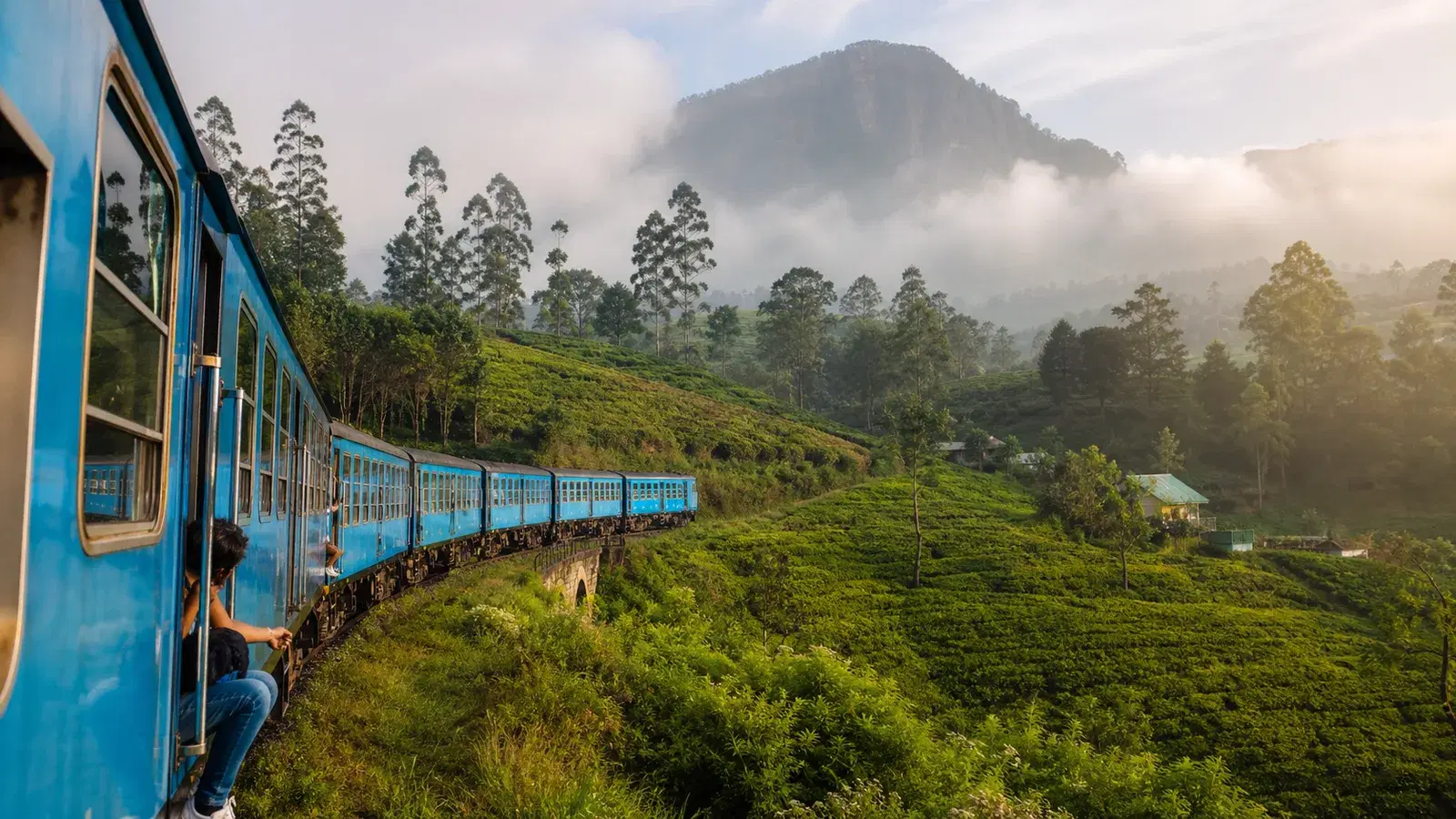
For years, the train from Kandy to Ella has topped lists of the world's most beautiful rail journeys: seven slow hours of tea estates, cloud forest, waterfalls, and mountain villages sliding past open carriage doors.

Then, in late 2025, Cyclone Ditwah tore through Sri Lanka's hill country. Landslides and floods did not just block the line; along parts of the route, they effectively erased it, washing away track, ballast, and earthworks that had carried trains for a century.

Here is the situation as it stands in mid-2026, stated plainly because so much online information is out of date. Trains run from Colombo as far as Rambukkana. Separately, trains run from Nanu Oya through Ella to Badulla. The long stretch in between, which includes Kandy's link to the upcountry line, remains closed while Sri Lanka Railways rebuilds it, and the reopening is currently expected around January 2027. Until then, there is no Kandy to Ella train, and any guide, video, or agent telling you to board the scenic train in Kandy is working from a world that no longer exists.

Now the good news, and it is genuinely good: the section that survives, Nanu Oya to Ella and onward to Badulla, is the part everyone came for. This is the stretch with the highest tea country, the deepest greens, the Nine Arches Bridge, and the Demodara Loop. Travelers who ride it today are not settling for a consolation prize; they are riding the highlight reel.

This guide explains exactly how to do that in 2026: how the current service works, how to reach Nanu Oya, how booking and seat classes really function, what you will see out the window, and how the experience will change when the full line returns in 2027.

Quick Summary

  • The classic Kandy to Ella through-train is not running in 2026: Cyclone Ditwah destroyed sections of track, closing the line between Rambukkana and Nanu Oya
  • Reopening of the damaged stretch is currently expected around January 2027; verify close to your dates as timelines can shift
  • The section still operating, Nanu Oya to Ella and on to Badulla, is widely considered the most spectacular part of the whole line, so the essential experience survives intact
  • Reach Nanu Oya by road from Nuwara Eliya, Kandy, or Hatton, then board the train for the two-and-a-half to three-hour ride to Ella
  • Reserved seats sell out fast in high season; book as soon as reservations open, or ride unreserved second or third class for the authentic open-door experience
  • The open section crosses the Nine Arches Bridge and the Demodara Loop, the two most famous engineering landmarks of the entire railway

The Current Status, Explained Properly

Cyclone Ditwah struck Sri Lanka in late November and early December 2025, and the central highlands took some of the worst of it. On the railway, the damage between the lowland edge of the hills and the high plateau was catastrophic: entire sections of track undermined, buried, or simply carried away by landslides and floodwater.

Since then, Sri Lanka Railways has operated the Main Line in two disconnected pieces. From Colombo, trains run up to Rambukkana, at the foot of the climb. From the other side, trains run between Nanu Oya, the station serving Nuwara Eliya, and the line's eastern end at Badulla, passing through Haputale, Ella, and Demodara.

Everything between Rambukkana and Nanu Oya, the stretch that climbs through Kadugannawa toward Kandy and then on through Hatton's tea country, is closed for reconstruction. Kandy therefore currently has no rail connection to the upcountry line, and journeys that historically began there now begin by road.

The rebuilding is a major civil engineering effort rather than a repair job, which is why it has taken this long. The current expectation is that the closed stretch will reopen around January 2027, restoring the full Kandy to Ella journey. Treat that as the working plan, not a certainty: mountain reconstruction timelines move, and the only reliable answer close to your travel date will come from Sri Lanka Railways or from people on the ground.

For 2026 travelers, the practical takeaway is simple: plan around the open Nanu Oya to Ella and Badulla section, reach Nanu Oya by road, and ignore any itinerary that still routes you through Kandy railway station for this trip.

Line runs in two pieces: Colombo-Rambukkana and Nanu Oya-BadullaRambukkana to Nanu Oya closed since Cyclone DitwahKandy currently has no upcountry rail linkReopening expected around January 2027Verify status close to your travel date

Why the Open Section Is the Best Part Anyway

There is an honest secret long known to hill-country regulars: even when the full line ran, the journey's magic was never evenly distributed.

The stretch from Kandy through the lower hills is pleasant, a warm-up of villages and gathering gradients. The drama begins as the line climbs into serious tea country, and it peaks precisely on the section that remains open today.

From Nanu Oya, the line is already above 1,600 metres, winding through the plucked green corduroy of the great estates. It climbs to the railway's summit near Pattipola, close to 1,890 metres above sea level, where on misty days the train seems to run through cloud itself, then begins the long, beautiful descent through Ohiya, past the fringes of the Horton Plains plateau, and along mountain ledges toward Haputale, where the land falls away thousands of feet to the southern plains in one of the most jaw-dropping window views on any railway anywhere.

From Haputale the line rolls on through Bandarawela's market-town bustle to Ella, and beyond Ella crosses the Nine Arches Bridge and threads the famous Demodara Loop, where the track spirals around a hill and passes beneath itself before reaching Badulla.

In other words: the summit, the cloud forest, the great southern viewpoint, the Nine Arches Bridge, and the Demodara Loop are all on the open section. Riders in 2026 lose the journey's length, not its heart.

If anything, the shortened format suits many travelers better. Seven hours of even the world's best scenery tests anyone's attention; two and a half to three hours from Nanu Oya to Ella is the espresso version, all crema.

Summit Level near Pattipola, almost 1,890 metresHaputale's vast southern viewpointNine Arches Bridge and Demodara Loop includedThe highest, greenest tea countryShorter ride, undiluted highlights

What You'll See: Nanu Oya to Ella, Window by Window

The open run divides naturally into three acts, and knowing them helps you decide when to fight for the doorway and when to sit back.

Act one, Nanu Oya to the summit: the train pulls out beneath the hills that hide Nuwara Eliya and climbs immediately into estate country, tea in every direction, pluckers' paths threading the slopes, factory chimneys on the ridgelines. Approaching Pattipola and the summit, the vegetation shifts to gnarled cloud forest and the air through the open windows turns genuinely cold; this is the stretch where mist most often swallows the world, which regulars consider a feature.

Act two, the descent to Haputale: through Ohiya the line clings to the mountainside in a sequence of tunnels and ledges, and then, past Idalgashinna, comes the moment people gasp at: the southern edge of the highlands drops away and, on a clear day, you can see across the plains toward the distant coast. Haputale station sits right on this rim. Sit on the right-hand side of the train, in the direction of travel toward Ella, for the best of this act.

Act three, Bandarawela to Ella and beyond: the country softens into vegetable gardens, eucalyptus, and small towns, a gentler beauty before Ella's station and its famous backpacker bustle. Staying aboard past Ella rewards you within minutes: the train crosses the Nine Arches Bridge, waving distance from the crowds photographing it from the slopes, then performs the Demodara Loop's spiral before the final run to Badulla.

A strong recommendation hidden in that last act: even if Ella is your destination, consider riding through to Demodara or Badulla and returning by road or a later train. Crossing the Nine Arches Bridge aboard the train, after or before photographing it from the ground, completes the experience in a way few travelers think to arrange. Our full Nine Arches Bridge guide covers the ground half of that pairing.

Throughout, the ride's texture is the point as much as the views: vendors walking the aisles with wade and tea, schoolchildren commuting between estate villages, the horn echoing ahead of every tunnel. This is working transport that happens to be beautiful, and it is best ridden with that spirit.

Act one: tea estates into cloud forestAct two: the Haputale rim viewpointAct three: Ella, Nine Arches, Demodara LoopSit on the right toward Ella for the big viewsConsider riding past Ella to cross the bridge

Seat Classes and How Booking Really Works

Sri Lankan trains offer a spread of classes, and choosing between them is choosing between comfort and atmosphere.

Reserved seating, where available on this route, sells specific seats in advance across classes that range from air-conditioned carriages to reservable second class. Air-conditioned first class gives guaranteed comfort and sealed windows, which is precisely its drawback: the sealed windows mute the sensory experience, and photographers generally avoid it. Reserved second class is the sweet spot many travelers choose: a guaranteed seat, opening windows, and the same open doors as the rest of the train.

Unreserved second and third class are the walk-up option: buy a ticket at the station shortly before departure, board, and find space. No seat is guaranteed, busy departures mean standing, and the carriages fill with everyday local life, which is exactly why many travelers love them. The iconic photographs of legs swinging from open doorways are almost all taken in unreserved carriages. Third class is entirely serviceable for a short scenic hop; the difference from second is density more than dignity.

Booking reserved seats works through Sri Lanka Railways' official channels, including station counters and the official online booking system, with reservations opening a set period before departure. In high season, the popular tourist departures sell out very quickly once booking opens, sometimes within hours, so the practical rules are: know when booking opens for your date, book at that moment if a reserved seat matters to you, and treat resold or marked-up tickets from unofficial sources with caution.

If reserved seats are gone, do not abandon the trip. Arrive early, buy unreserved tickets, board as soon as the train arrives, and you will very likely find a seat outside the absolute peak departures, and a doorway spot regardless.

Fares on all classes remain, by international standards, remarkably cheap; even first class costs less than an airport sandwich in most travelers' home countries. Whatever you pay, the view is identical.

Reserved second class: the sweet spotAir-conditioned class mutes the experienceUnreserved: authentic, cheap, no guaranteesBook the moment reservations openAvoid marked-up unofficial tickets

Getting to Nanu Oya to Board the Train

With Kandy disconnected from the line, every 2026 scenic-train plan starts with a road journey to Nanu Oya, and the good news is that Nanu Oya is easy to reach from every direction travelers come from.

From Nuwara Eliya, Nanu Oya is the town's own railway station, a short fifteen-to-twenty-minute drive away. Travelers following the classic itinerary simply overnight in or around Nuwara Eliya, visit the tea country by road, and board the morning train fresh. This is the smoothest version of the plan and the one our full island itineraries are built around.

From Kandy, the road to Nanu Oya takes roughly three hours of beautiful climbing through Ramboda's waterfalls and tea estates, itself a consolation-grade scenic journey. Travelers using a private driver typically leave Kandy in the morning, stop at a tea factory en route, and connect to an afternoon departure, or overnight in Nuwara Eliya for a morning train.

From Hatton and the Adam's Peak area, Nanu Oya is a shorter hill drive away, making the train an easy continuation for pilgrims and hikers descending from the sacred mountain in season.

A note on luggage that solves itself with planning: if you travel with a driver, the standard arrangement is that you ride the train with a daypack while the driver carries your main luggage by road to Ella and meets you at the station. Independent travelers manage full backpacks aboard without drama, but stow them clear of the doorways everyone wants to stand in.

Whichever approach road you take, build slack before departure. Hill roads have their own schedule, and the train, for all its famous lateness, occasionally leaves on time out of pure mischief.

Nanu Oya is Nuwara Eliya's stationRoughly three hours by road from KandyDriver carries luggage, you ride lightOvernight in Nuwara Eliya for morning trainsArrive with time to spare

Riding Tips: Doors, Sides, Snacks, and Sense

A few learned habits separate a good ride from a great one.

Choose the right side. Toward Ella, the grandest long views, including the Haputale drop, favour the right-hand side of the train; toward Nanu Oya, the left. That said, the best riders drift: the scenery alternates, doorways exist on both sides, and a two-and-a-half-hour ride leaves time to sample everything.

Master doorway etiquette. The open doors are the journey's signature, and sharing them is the unwritten rule: take your photographs, enjoy your stretch, then yield the frame. Hold the handrail with a real grip, keep phones on straps or in firm hands, since the ravines below have swallowed many, and never lean out on the tunnel side or around blind curves; the clearances are closer than they look.

Dress for the mountains, not the tropics. The summit stretch is cold enough for a proper layer even at midday, and windows-open carriages amplify it. A light rain shell earns its space in every season.

Eat like a local. Station vendors and walking sellers offer tea, wade, samosas, and fruit; carrying small notes makes these transactions easy and the ride tastier. Bring water regardless.

Guard the practical things lightly but deliberately: keep valuables zipped and on your person in busy carriages, and keep your ticket handy for inspection. Crime aboard is rare; carelessness at open doors is the actual risk worth respecting.

Finally, budget attention as carefully as seats. The instinct to photograph everything fights the reason you came. A useful ritual: cameras away entirely for one full act of the three, chosen in advance. The stretch you merely watch is the one you will remember.

Right side toward Ella for the big viewsShare the doorways, grip the railsBring a warm layer for the summitSmall notes for tea and wade vendorsPut the camera away for one full act

Other Scenic Rides While the Main Line Heals

The upcountry line is the headliner, but Sri Lanka's railways offer two supporting acts worth knowing about in 2026, especially for travelers whose routes do not reach Nanu Oya.

The coastal line from Colombo south toward Galle and Matara runs for long stretches within metres of the Indian Ocean, palms and breakers filling the windows, and famously featured in the imagery that made Sri Lankan trains internationally recognisable. It is commuter transport rather than a tourist set piece, cheap, frequent, and unreserved for the most part, and a Colombo-to-Galle ride slots perfectly into the southern leg of any itinerary as a scenic transfer rather than an excursion.

The operating lowland stretch of the Main Line itself, Colombo to Rambukkana, offers a gentler preview of the hill aesthetic, paddy fields giving way to the first gradients, though most travelers on standard routes will find road transfer more practical for that segment in 2026.

On the open hill section, keep an eye out locally for special tourist-oriented services that Sri Lanka Railways has operated in recent years, with panoramic carriages and photo-stop schedules; availability and routing have naturally been affected by the closure, so check what is actually running when you book rather than relying on pre-cyclone descriptions.

And for rail-minded travelers with flexible 2027 plans, the calculus flips entirely: once the Rambukkana to Nanu Oya stretch reopens, currently expected around January, the full Kandy to Ella classic returns, and riding the rebuilt line in its first months will be its own piece of railway history.

Until then, the formula for 2026 stands: road to Nanu Oya, rails to Ella or Badulla, and the best of the mountain railway exactly as generations have known it.

Coastal line: Colombo to Galle by the seaColombo to Rambukkana still operatesCheck current special services when bookingFull line expected back around January 20272026 formula: road to Nanu Oya, rails to Ella

Fitting the Train Into Your 2026 Itinerary

The shortened train changes surprisingly little about good route planning, because well-built itineraries already travel the closed stretch by road.

The standard structure, used in all three of our full island itineraries, runs: Cultural Triangle by road, Kandy by road, the climbing drive to Nuwara Eliya with tea-factory stops, then the train from Nanu Oya to Ella. The rail closure simply converts what was once a rail option into the road journey most travelers with drivers were choosing anyway for its flexibility.

Timing the train day is the one decision worth making early. Morning departures from Nanu Oya offer the best light and the most reliable onward day in Ella; they also require either an overnight in the Nuwara Eliya area, the recommended pattern, or a very early start from Kandy. Afternoon departures suit travelers who want the morning for Gregory Lake or a tea estate and accept arriving into Ella at dusk.

Allow buffer on both ends of the ride. Hill-country trains are lovable and late in equal measure, sometimes by hours, and no onward connection, safari pickup, or flight should ever depend on a punctual arrival. Build the train into the middle of your route, never against a hard deadline.

Travelers skipping the hill country entirely, on tight southern-loop trips, can still collect a scenic rail memory with the coastal line toward Galle, and travelers heading north or east lose nothing by saving the mountain train for a 2027 return, when the full seven-hour classic is expected back.

However it fits your route, book the pieces in the right order: reserve the train seats the moment booking opens for your date, then arrange the road transfer to Nanu Oya around the departure you secured, not the other way around.

Road to Nuwara Eliya, rails from Nanu OyaMorning departures suit most itinerariesNever schedule hard deadlines after the trainCoastal line for hill-country skippersBook seats first, arrange transfers second

Travel Tips

  • Plan around Nanu Oya, not Kandy, for any 2026 scenic train ride
  • Verify the line's current status close to your travel date; reopening is expected around January 2027 but timelines can change
  • Book reserved seats the moment reservations open for your date
  • Choose reserved second class for the best comfort-to-atmosphere balance
  • Sit on the right-hand side traveling toward Ella
  • Have your driver carry main luggage by road while you ride with a daypack
  • Bring a warm layer; the summit stretch is genuinely cold
  • Carry small notes for onboard tea and snack vendors
  • Hold handrails firmly at open doors and never lean out near tunnels
  • Never schedule tight connections after a hill-country train
  • Consider riding past Ella to cross the Nine Arches Bridge aboard
  • If reserved seats are sold out, arrive early and ride unreserved

Frequently Asked Questions

Is the Kandy to Ella train running in 2026?

Not as a through-journey. Following Cyclone Ditwah in late 2025, the line between Rambukkana and Nanu Oya, including Kandy's connection, remains closed for reconstruction. Trains currently run from Colombo to Rambukkana, and separately from Nanu Oya through Ella to Badulla. The closed stretch is expected to reopen around January 2027.

Why is the hill-country train line closed?

Cyclone Ditwah struck Sri Lanka in late 2025 and caused catastrophic damage in the highlands, with landslides and floods destroying entire sections of track between Rambukkana and Nanu Oya. Rebuilding the mountain line is a major engineering project, which is why the closure has lasted into 2026.

When will the full Kandy to Ella train reopen?

Reopening of the damaged Rambukkana to Nanu Oya stretch is currently expected around January 2027. Treat this as the working plan rather than a guarantee, and confirm the latest status with Sri Lanka Railways or locally close to your travel date.

Can I still ride the famous scenic train in 2026?

Yes. The Nanu Oya to Ella and Badulla section remains open, and it is widely considered the most spectacular part of the entire line, including the summit near Pattipola, the Haputale viewpoint, the Nine Arches Bridge, and the Demodara Loop. Reach Nanu Oya by road and ride from there.

How do I get to Nanu Oya station?

Nanu Oya is Nuwara Eliya's railway station, about fifteen to twenty minutes from the town by road. From Kandy, the drive takes roughly three hours through tea country; from Hatton and the Adam's Peak area it is shorter. Most travelers overnight in the Nuwara Eliya area and board a morning train.

How long is the train ride from Nanu Oya to Ella?

Around two and a half to three hours, depending on the service and the day's delays. Continuing past Ella to Badulla, across the Nine Arches Bridge and around the Demodara Loop, adds roughly another hour.

How do I book tickets for the scenic train?

Reserved seats are sold through Sri Lanka Railways' official channels, including station counters and the official online booking system, with reservations opening a set period before travel. Popular departures sell out very quickly in high season, so book the moment reservations open. Unreserved second and third class tickets are always available at the station on the day.

Which side of the train has the best views toward Ella?

The right-hand side in the direction of travel offers the biggest views, including the dramatic drop near Haputale. The scenery alternates throughout, though, and the open doorways on both sides are the best seats of all.

Which class should I choose on the hill-country train?

Reserved second class is the sweet spot for most travelers: a guaranteed seat with opening windows and access to the open doors. Air-conditioned carriages are more comfortable but seal you away from the sensory experience, while unreserved classes offer the most atmosphere with no seat guarantee.

Is the train ride suitable for families and older travelers?

Yes. The ride is gentle, seated, and short in its 2026 form, and reserved seats remove the scramble. Families should keep children away from open doorways while the train is moving, and everyone should pack a warm layer for the high-altitude stretch.

Reader notes

Join the conversation

Share your question, tip, or travel experience for this guide.

Comments

0 comments

Loading...

Ready to turn inspiration into a Sri Lanka trip?

Use LankaTrip to plan your journey, connect with local guides, and make this itinerary a reality.

Need help planning?

Plan your Sri Lanka adventure

Plan my trip